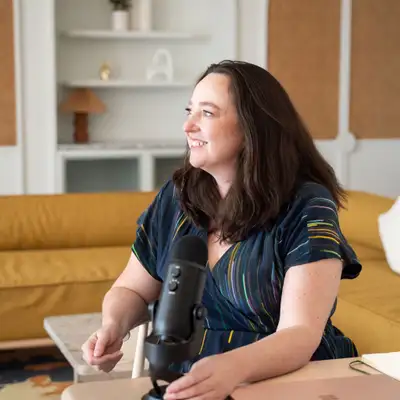
Career Advice: Career Planning, Seizing Opportunities and Ambition
Hello, and welcome to Career Stories, the podcast that shares other people's career stories to help you with yours. I'm Doctor. Luella Forbes, and each week, I sit down with leaders, experts, and entrepreneurs to uncover the stories behind their careers. Listen every Wednesday for the latest career story. Okay.
Luella Forbes:So welcome to our second ever career advice episode. For those who are new joining us, this is where I am Luella Forbes and my colleague Michelle Gander reflect on the month's episodes, so the interviews that we've done this month, and talk about what the learnings and the lessons might be for you and for your career. So we're going to be talking about the three episodes today that the three episodes that came out this month. So Steve Price, Mia Carbon, and Dinda Timperan. And before I start that, though, I just want to say thank you so much, everybody, for all your comments and feedback about the podcast.
Luella Forbes:I'm very excited to say that we have now been downloaded in 20 countries. And I think, Michelle, when I told you that, our little minds were slightly blown.
Michelle Gander:Right? Yeah. Absolutely.
Luella Forbes:Yeah. And I want to say thank you to everybody who's messaged me or sent us an email with their feedback around kind of what they liked and also perhaps some things that we can change because we're still learning. We are.
Michelle Gander:And this is a learning journey.
Luella Forbes:It's a very learning journey. So thank you very much. So I particularly wanna say thanks to two Fiona's, Kim and Kelly and Anna and Lucille for your feedback. It's been really, really appreciated. So let's start off then by just talking about who we met this month.
Luella Forbes:So we met Steve Price, who works at David Jones, but has got a background in financial services and payments. And I think he talked quite interestingly about some of his career decisions and choices. We met Mia Carbon, who trained as a vet and has ended up as a public servant. And we met Dinda Timperan, who has a very varied kind of background and set of interests, including as a fighter plane tester and now as a head of cybersecurity, as well as being really interested in that kind of personal development and the community she's created. Michelle, I'd love to hear your reflections on those conversations.
Michelle Gander:Great. Thank you, Luella. And hello, everybody. Nice to be back. And as always, I have to say that the opinions that I am about to talk about on this podcast are my own opinions and not the opinions of my employer, Murdoch University, so just get that out of the way.
Luella Forbes:Yes, and let's also remind everybody that any opinions shared by our guests are also their own opinions and not that of their employer. Absolutely. So Just to have us all covered.
Michelle Gander:Yeah. That's right. Yeah. Yeah. Yeah.
Michelle Gander:Yeah. So three really different people, which is great. I found Steve's career kind of experiences, like, I mean, you couldn't really get as different to mine, but also because he's like an organizational career person, like actually quite similar in that respect. And so what he was talking about around managing a career long term, I think he was fifteen years in one organisation, ANZ, was Yeah. Before he moved or decided to move, I thought that was really interesting.
Michelle Gander:And I thought, you know, that decision making that he went through has gone through on a number of occasions around when's the right time to move. I think we wanna dive into that a little bit because that's really interesting.
Luella Forbes:I just think on Steve, the other thing that really struck me was some of the innovation that he's been at the forefront So, you know, working on The UK's first ever internet banking platform, bringing Apple Pay to Australia. Yeah. And they're all things that we kind of take for granted a little bit now, but at the time, were kind of radical.
Michelle Gander:Yeah. Absolutely. In fact, I remember the first kind of actually, I don't know. Did he say who he worked for? Nationwide.
Michelle Gander:Nationwide. Like the internet banking coming in, I remember that. Yes, I am that old. And it was just this amazing thing that you don't have to go into your branches anymore, right? It was so great for working women, for example.
Michelle Gander:Exactly. And thank you, Steve, for introducing Apple Pay. So yeah, you're right, that's one of those things, I guess, in terms of career decision making is around, you know, is it is it still fun? Is it are you still doing something kind of I
Luella Forbes:think also the theme that comes out from that is just because you're changing industries. So Steve's someone who's worked in lots of different industries, but there's been a running thread still through the work that he's been doing. Absolutely. And the kind of theme around that innovation and that kind of thinking about what could be coming next that would be useful for customers even though he's gone from retail, you know, small business provider. Absolutely.
Michelle Gander:Yeah. And I think you're right that and he was very clear that, you know, his focus was always the customer and the customer experience. Right? And that's, you know, we would hope that all of the organizations that we have to deal with put customer experience first. I'm not sure that's entirely true.
Michelle Gander:But it's clear. And from the people that he's or the organizations he's worked for, clearly that's, especially the one now, that's clearly really true for that organization. So yeah, he was, I just found it very different careers, but also kind of, you can always take things from people's career stories, I think, that resonate with your own.
Luella Forbes:I think so. And I find it really hard because I always have almost at the start of talking about every episode going, I love that one. And I think it's fair to say I've loved all of them because although they've all been really different, I think there's always something that you can take for it.
Michelle Gander:Definitely. Yeah. And then, you know, then we moved on to Mia, obviously, like very, very different career. I don't think I ever wanted to be a vet, I think that it was more marine biologist, but I can get, you know, I was at school with people who were desperate to be vets. I think it's probably one of the hardest jobs to deal with.
Michelle Gander:You go into it because you love animals and actually then you're not really necessarily getting to pet fluffy bunnies the whole time because they're sick and you'll do it. And she actually said, you're actually dealing with people in really heightened emotional situations. So the skills that you need to deal with that, the emotional intelligence almost. And she was saying how universities were a bit better now at kind of trying to teach some of these skills, actually but it's probably almost the opposite of that very highly technical and analytical skills that you require as well in vets and medicine and health more broadly.
Luella Forbes:And I think the thing that stood out for me in the in Mia's conversation is I can't remember how old she was when she realized that she didn't
Michelle Gander:want to be a vet, but I think Quite young. Yeah.
Luella Forbes:And I just I I have know what it's been like in my career when I've thought we talked about this last time, I think, actually, where we've had this really clear idea about what we're gonna be. And it becomes a little bit a part of your identity. Right? Because you're kind of going, you know, well, I'm gonna be a partner at KPMG or you're gonna be a COO of a university, whatever the the thing is. And then the kind of realization when that doesn't happen and you have to make a different choice.
Luella Forbes:Yeah. I I know how hard that is. And as you say, it happened quite young for her Yeah. To kind of realize that and then having to kind of pivot that that must have been so difficult.
Michelle Gander:Yeah. Especially when, you know, for a lot of us, I think we didn't know exactly what we wanted to do when we kind of graduated or whatever. But you do, you build your your career becomes part of your identity, right? It's called identity work when we create our corporate identities and work for a very good reason because you're building something. And so for her to kind of realize that the thing that she'd held onto for so long was not the actual thing that she wanted to spend time doing, and how fantastic in a way to face up to that and to make a decision rather than just go, oh, but I've spent five, six, I guess seven years, five years vet and she did postgraduate study.
Michelle Gander:That's a lot of investment for you to then go, oh, I'm not sure. So her career switch into something that's still, and she said herself actually it was a vet specialist within the public sector, and then it was like the next step was to kind of like, she's not a vet anymore kind of She manages lots of vets amongst other things. So you can see how it's a logical progression for sure, but very different doing what she's doing now than when she was from, you know, seven or whatever it might have been, I want to be a vet. Yeah, exactly. Exactly.
Luella Forbes:And then we have Dinda.
Michelle Gander:Dinda, who I think was was amazing, a passionate woman, and how she fits everything in, I do not know.
Luella Forbes:I I did I did try to ask her. Yeah. I just feel like I I don't feel like I figured it out, but I I feel like the thing that I really loved about talking to Dinda is her energy. Yes. And and the amount that she knows her own mind.
Michelle Gander:Yeah. Yeah. And she was talking a little bit about, again, is another person that's kind of done this career switch. But also she was talking about being ambitious and still being ambitious, which is fantastic to hear, right? But yeah, and just what she's clearly giving back to the community as well.
Michelle Gander:I mean, she would have, I'm sure, and she didn't really talk about it, but I'm sure there would have been gender issues in the Air Force. I'm sure she was also a woman of color. I'm sure that wouldn't have been the easiest ride that she would have had. So I'm sure she's dealt with a lot of things that she, you know, she didn't bring up, but I can imagine, you know, in that environment what that might have been like. But the fact that, you know, hasn't didn't stop her.
Michelle Gander:Right? Not a role model.
Luella Forbes:Right? Well, exactly. And and that's kind of what I mean about knowing her own mind. I mean Yeah. You know, deciding when you're 17 that you're gonna go join the RAF even though there's no kind of
Michelle Gander:And she was like, oh, I don't know what I wanna do, but
Luella Forbes:I wanna join the RAF. Wanna do that. And I and and she's very clear about that, but also is very clear about, know, you what she wants to do now and how she wants to give back to the community. And I think the there's a certain amount of determination that comes that that she shows. Yeah.
Luella Forbes:And so the the energy, the drive, the determination to kind of there's one thing thinking about doing all of those things is quite a different thing in actually doing them. I I agree.
Michelle Gander:And I think a lot of a lot of people, I think, do think about doing lots of things as part of their career outside of the core doing your job. But I think for some people it's really hard to translate that into practice. So we all have really good I mean, this podcast is actually a really good example, right? Oh, it's so cute. Yeah, when Luella first said to me, oh, I'm thinking of doing this podcast, do wanna join?
Michelle Gander:I thought, oh, I've been thinking of doing a podcast for ages, but of course, academic, I'm good at all the ideas and not so good at actually making anything happen.
Luella Forbes:Well, and then when I said we're gonna record the first episode, you were like, oh, like we're actually
Michelle Gander:doing Yeah. We're not just talking about it for another eighteen months, which
Luella Forbes:is what I'm really
Michelle Gander:used to. So yeah, so just being able to go, I wanna do this and actually I'm gonna give it a go because what's the worst that can happen? We don't get listened to in 20 countries, but that hasn't happened. So I think that's a good lesson for anybody that wants to try a new thing, be it within their career or even like outside in their personal life is just give it a go because what's the worst that can happen generally? Not really very much.
Michelle Gander:I mean, I know when we moved to Australia, for example, people said, oh, you're really brave. Know, what you're doing is a huge thing. And it was like, well, it's only Australia, it's not like I'm moving to, I don't know, Vietnam or so I don't speak the language or it's like I've got to ship everything up. The worst that can happen is it doesn't work, I've wasted a lot of money, I move back again, but had this amazing experience in the short term.
Luella Forbes:And there's a couple of dimensions, guess, to that. So one is about kind of your attitude to risk and kind of so, know, the people who went backpacking around the world when they had their gap year or after university, they blow my mind because that feels far more risky to me than moving to Australia with a job lined up, which is what I Yes. And but but to some people, they kinda go, oh, yeah. But that's just a long holiday. This is forever.
Luella Forbes:Like so I think it just I mean, I think we're probably gonna end up saying this lot. It depends on kind of personal circumstances and what your context is and what your appetite for risk is. So I think that's a factor. I think there's another factor, though. You know, we mentioned ambition about kind of that level of planning or kind of direction that you want to have.
Luella Forbes:And I found it interesting that I asked I don't know if I asked everybody, I definitely asked Steve about does he have a strategy Yes. To his career. And he sort of says, oh, no. I'll just wait and see what's coming up. But actually, when he talked about the decisions that he made, they were quite strategic Yes.
Luella Forbes:Decisions. So you mentioned the decision to leave ANZ as an example. He he clearly thought strategically about what he wanted. Yeah. Yeah.
Luella Forbes:Yeah.
Michelle Gander:And Mia was the same in a way.
Luella Forbes:Yeah. Because she kind of she was like, oh, I just happened to find a job advertised when I was in Australia. And I'm like, yeah. But you had to look.
Michelle Gander:You had to you had to look or you had to be open to have a conversation. So, like, you didn't just somebody just didn't give you the advert
Luella Forbes:kind magically in person. Suddenly, the job appears, like, you know, on your doorstep. Like, you actually would have had to have done something to
Michelle Gander:do that. Yeah. And I found Steve's as well. So he was you you asked him about that and he was like, oh, not not really. But then he said, oh, he's got these principles.
Michelle Gander:And actually, that now they're now kinda almost written down principles. Oh, he said they definitely were
Luella Forbes:written down.
Michelle Gander:Around change. So So you might not think that you're strategic, but I, you know, and just from the people that we've been or you've been interviewing, like you don't get to
Luella Forbes:those positions.
Michelle Gander:You can say we, it's how I We, I know, right? Yeah. You actually don't get to those positions without you don't accidentally end up as general manager, right? There are decisions that you make. I always say making a decision is the right thing to do because decisions usually turn out okay.
Michelle Gander:People make them turn out okay. And then you can generally undo decisions, right? I remember once, wrote a book a long time ago, ten years ago now, and I interviewed somebody who was head of our Facilities and Estates department. And he said that he'd gone to work, he'd left one university because he'd been, he'd secured this job, I think it was for one of the police forces, same kind of job, facilities kind of thing. But he'd been there and within six months he knew like the culture was not for him, you know.
Michelle Gander:And so he took that decision to find another job really quickly and move on. And, you know, he said, yeah, it might look a bit weird on my CV, but actually for me, that values alignment was really important. Like, he wasn't at the beginning of his career, right? It was kind of, you know, mid career at that point. So you've got a little bit, you know, thinking about your comment about risk.
Michelle Gander:I think when you're the beginning of your career, like the decisions that you make, they're not as easy a lot of the time around risk because, you know, you don't have maybe a lot of savings or, you know, whatever it might be. Whereas when you're a bit further into your career, you can perhaps take a few more risks because you and also just with the experience of knowing generally everything turns out okay, more and And you know you know yourself, yeah, in terms
Luella Forbes:You of career, can make I think particularly in current times, people are much more aware about the importance of kind of mental well-being. And you know that, you know, may there might be a trade off between your kind of mental well-being and your financial well-being. And you can make a decision about kind of where those things, kind of those factors come in.
Michelle Gander:Yeah, and it's always a holistic decision, right? It's not just the one thing ever, really. So yeah, so I think, you know, all of them really had that thread through those discussions.
Luella Forbes:I'm interested, do you think you're an ambitious woman?
Michelle Gander:I think I would say yes. I think probably less ambitious now in terms of getting to a particular job or role. I was very clear earlier on in my career, as we said previously, that I wanted to be a Chief Operating Officer of university. And I was, you know, really consciously working towards that, doing all of those things that you have to do, like getting your MBA and, you know, that signals that you're interested in senior roles and all of that. But I had a really interesting experience.
Michelle Gander:So when I was at the Open University, I think I was probably about 30 at the time and I just wanted to do some professional development, right? There was a postgraduate certificate that I wanted to do. It was in higher education leadership. So I went to my supervisor and said, you know, this is what I want to do and this is why I think it would be really good. Hany was basically like, no, I don't think I'm gonna support you.
Michelle Gander:And then said really disparagingly, oh, you're so ambitious. And it really stayed with me. It was like, it was the tone that he said it in and it was just like, I don't know, I can't remember how much it affected me, but I can still remember it and that was a long time ago. So I applaud all the young women nowadays that embrace wanting to be ambitious and wearing that as a badge of honor because there is nothing to be ashamed of about that.
Luella Forbes:Yeah. I mean, I I feel like I've had similar experiences. I I think the thing for me is because of that there's something in my nature that is very goal oriented. That is how I Yeah. Run my life is I'm clear on, I don't know, do I need to save, you know, a certain amount of money for a holiday, or do I need to, I don't know, do a certain you know, run five kilometers in a certain time.
Luella Forbes:It's just a a way that I'm made up
Michelle Gander:Yeah.
Luella Forbes:Is that kind of achievement oriented thing. Yeah. And so I have I've got some quite big plans for what I want to do in the next kind of five years. And I'll be honest, I don't think I've really told anybody fully what the little plans that I wake up in my head are because I think that they'll think I'm either too big for my boots. It's that kind of tall poppy syndrome thing or that that just be laughable, you know?
Luella Forbes:Yeah. What makes you think that you can have a successful podcast, for example?
Michelle Gander:Yeah. Yeah. For sure.
Luella Forbes:And whereas I kind of go, what's the point of doing a podcast if you don't think it's gonna be successful? So so and I think some people, when they know that stuff, they kinda go, oh, that's very ambitious. Whereas for me, I kind of go, it's just a path that I'm on, and it's the way I'm made up. And actually, if some if a crossroads came up and it turned out that there was a different path, then I would happily go down that, and I wouldn't feel any kind of disappointment that I had failed in achieving those goals or anything. It's more just that, for me, I like to know where I'm going.
Michelle Gander:Yeah. Yeah. No. I I think that's true. And I think and I think that, you know, I I think that, you know, we're a certain age group, well, older than you, but, you know, we're a certain age group.
Michelle Gander:Like, we're women as well, so we've been very, you know, we're in the culture that says women aren't ambitious and they, you know, they don't reach the top jobs Well, shouldn't be. And shouldn't, well, yes, indeed. And in fact, McKinsey released their working women, I think it's called women in the workplace, they released their latest report. And interestingly, if women receive the same career support as men, then there is no ambition gap between men and women in the workplace. And this is corporate America, right?
Michelle Gander:It might be slightly different here, but probably not. But if they perceive that there is an imbalance in the career support that men and women are receiving, then there is a much wider gap. Women will step back from from saying that they're ambitious to get to certain roles or levels or pay, whatever it might be.
Luella Forbes:And I I definitely stopped.
Michelle Gander:Right. For quite a long
Luella Forbes:time, I stopped saying Really? Anything. And I wonder whether that's why I haven't Yeah. Spoken so much about what my plans are now is because in the past, I've had that as Yeah. So, you know, in the same way as I think women get talked about as being kind of bossy or something like that.
Michelle Gander:And that's
Luella Forbes:a quite a gendered term.
Michelle Gander:Yes. For sure.
Luella Forbes:That that I've had the criticism that says, well, but Luella, you're very ambitious. And that never is has never compliment.
Michelle Gander:Yeah. It's right. It's not a compliment for women. Right?
Luella Forbes:Yeah. Whereas I can't imagine somebody saying to Steve, who is lovely, by the way. Yeah. Yeah. But, you know, if somebody went to Steve and said, you're very ambitious, I don't think that would be a criticism.
Michelle Gander:No. No. That's right. And also then his response would be different to our responses, It would be, oh yeah, I am, probably, or thanks, yeah, why not? Whereas we'd be like, oh, I know it's just the next natural step or yeah, yeah, you know.
Luella Forbes:I'm just on this path.
Michelle Gander:It's captivated all the time. Right? So and it's there was another study that showed that young women in college, again, it's American study, young women in college, there is no difference between their ambition with their peers, their male peers. But once they get into the workplace, that ambition starts to widen. So it's a really, you know, even nowadays for young people, it's still a highly gendered area And I think we should be encouraging women to embrace ambition.
Michelle Gander:It's a positive thing to have. It means that you're, you know, as you say, you're going to set goals, you're going to create plans on how to reach those goals. You might not reach it for whatever reason that might be, or it might take you longer or whatever, but why would you not have these big goals?
Luella Forbes:If you don't aim high, how are you gonna get even near it?
Michelle Gander:Yeah, yeah, yeah, that's right. So I think, yeah, I think our mission is to be applauded for both sexes and, you know, and we just need to be aware if you are kind of a manager or a leader in a workplace that whether you see it or not, you need to be aware that you almost probably feel like you're doing more for women than you are because then you're probably doing about the same for men and women. Right? So it's a bit like when you're in a change process. If we feel if the change is being done to us and we feel like there's too much communication, it's probably about the right level of So communication, I think, you know, for managers and leaders, I think knowing that those sorts of stats, you can then, you know, slightly change how you might mentor young people in the workplace.
Luella Forbes:Well, and how do you support their ambitions? Yes. Because I think the other thing that I have experienced is that people I'll say people because it's very generic, but I have had experiences where I've had not only my leaders, but other people above me who it has felt like they've always wanted to kind of squash my ambitions a bit and put my put me in a in a little box. And that doesn't feel like a very welcoming and encouraging environment. So I'm very happy to be kind of for my ambitions to be tempered and have a reality check on them.
Luella Forbes:But that shouldn't be about you can't ever do that. It should be about in order for you to do that, you're going to need to do these things. This is how I can help you. Those kind of conversations.
Michelle Gander:Absolutely. And I think it is about, you know, we know that in the workplace, you know, women don't have the sponsoring effect as much as men. They're often mentored by other women, which is great, but actually the most powerful thing is for a senior male colleague to mentor a more junior female, because they have the networks, they have access to resources that they can then share with that female mentee. So you do need to, as always, when we're talking about I mean really we're talking about talent management, right? And we wanna make sure that that's equitable across the workforce.
Michelle Gander:And the same would go for, you know, if you've got people of color in the workforce, First Nation staff, disabled staff, you have to be really conscious about what you're providing all of your staff.
Luella Forbes:Yeah. And I think there's the other benefit of that is that for those leaders, them understanding what some of the constraints or difficult, you know, the difficulties that women might be having in comparison to the their normal Yeah. Mentees Yes. Who might be men or the and as you say, with any of those diversity groups, that also gives them awareness and kind of addresses some of their unconscious bias Yes. As well.
Michelle Gander:Absolutely. And and it was interesting. I read a recent study actually on office housework, men and women both do office housework and it's different, but both do it. But interestingly, this study found that it benefited men. They get promoted more if they undertake office housework, whereas it actually has no effect for women.
Michelle Gander:So we do also need to be aware that what we choose to do in the workplace also has effects, right? So if you are organizing those traditional things that we tend to do, which is all around relationship building and collaboration, it takes time and it takes time out of other more productive things that you could be doing for managing your career. Yes, does it make the workplace lovely? As I think I said last week, someone's bringing those cakes into the office. I'm not a baker but I appreciate bakers.
Michelle Gander:But it does it is stopping you from doing other things.
Luella Forbes:I think also silly things like the number of times I've been in a meeting and I need somebody to take notes and or write something on the board and they give the pen the pen always goes to the woman.
Michelle Gander:Yeah. Yeah. Yeah.
Luella Forbes:Why why can't the man write the notes Yeah.
Michelle Gander:That's right.
Luella Forbes:From the meeting? Yeah.
Michelle Gander:Least with with, like, Teams now or whatever, you can record
Luella Forbes:You can do your yeah.
Michelle Gander:Yeah. Can do your notes. Yeah. That's that's right. I had a really good one where we all went to the room to have the meeting in, but the room was locked and none of us had a key, obviously.
Michelle Gander:It was like the executive team. And everybody turned around and looked at me like I could suddenly somehow magically arrange for this office to be opened. And I just looked back going, I I don't know what to do either. Right? Yeah.
Luella Forbes:They we're we're gonna end up talking about this. You don't know you don't know this because you haven't heard our next guest. No. That's right. Next month, we have a diversity specialist
Michelle Gander:Oh, excellent.
Luella Forbes:Who will also be talking a little bit more about these kind of challenges. And she she explains it really well. So we'll we'll I'm sure we'll come back to
Michelle Gander:this Come back to it.
Luella Forbes:Yeah. Topic. The thing that I wouldn't mind touching on a little bit is we've talked a bit about career planning, and I've talked about how I like having a goal Yeah. Just because that's the way I'm wired. And, you know, both Steve and Mia kind of didn't seem to have a goal in the same way, but were quite good at seizing opportunities.
Luella Forbes:Because we've talked about how they were strategic and that they kind of they still knew when to take the opportunities. I just wonder whether we can talk a little bit about that kind of approach because sometimes you don't plan stuff, but stuff comes up, right?
Michelle Gander:Yeah, yeah, absolutely. And there's different ways you can look at it. So oftentimes people make decisions because there's been some sort of, you know, we call it like career shock. So whether that's a restructure or something happening internally in the organization, but it could be something outside of the organization that happens as well. But you have a career shock, it kind of forces you to self reflect on your future plans.
Michelle Gander:And then we talk about whether there are push or pull factors. So, I think Steve and me are both, they weren't really in absolute, they weren't like significant push factors. I'm sure Steve could have stayed where he was and he would have had a perfectly great career, I'm sure. For him, think it was, you know, there was a slight push in terms of he felt like he'd done everything that he could do there. He wasn't really learning new things.
Michelle Gander:I'm sure there would have been another project that he would have run and all of that kind of thing. But I think for a lot of people, you know, you get to this point where you're, you know, of these people that we've interviewed, they clearly have a growth mindset, right? So they enjoy new things.
Luella Forbes:And learning.
Michelle Gander:And learning, you know, if you're looking at Maslow's hierarchy of needs, know, the self actualization, the very top stage, need to do new things all the time. It's just how your brain's wired, and I'm exactly the same. I get bored very quickly, and I know you do too.
Luella Forbes:I was like, why would we be here otherwise?
Michelle Gander:That's Yeah. That's right. I haven't got enough other things to do. And it's interesting because the stats show that people often change their jobs every four years, and obviously that is slightly context dependent. But that really resonates for me because I didn't know that I've actually looked that up today for this podcast.
Michelle Gander:But I've always said four years is about my time because you spend the first year getting to know the job, the second year doing the job well, the third year you're improving the job, And then the fourth year, oh, actually, I'm bored now. I need to
Luella Forbes:go. It's roughly the same for me
Michelle Gander:as well. So funny.
Luella Forbes:But I'm interested in, if I can just go back a second. Yeah. So you talked about the career push and the career pull. So what you what you mean by that is that there might be something that's inside the organization that's kinda pushing you out. So something that's changed in the organization, or there might be something that's kind of changed outside.
Luella Forbes:Yes. And I think you talked about Maslow's hierarchy of needs. I think we you you can quite often be operating at kind of either one end or the other end. Right? So so in the, you know, in in the space where you're excited about the future and you're looking for a new challenge, you're right at the top looking for that self actualization.
Luella Forbes:In the space where the organization has changed significantly and you're worried about your job security and your ability to pay your mortgage and all of those kind of things
Michelle Gander:You're back down to security. You're back down at
Luella Forbes:the bottom again and the safety. And Yeah. And so I think the pull can sometimes be the self actualization and the and the push can be the security.
Michelle Gander:Yeah, absolutely. And I think the push can also be I mean, whether you class it as a push or a pull is probably debatable, but let's say your own circumstances have changed. You get older, maybe you're caring for your parents. Or you have kids, or Or you have kids, which is obviously very common for Or women partners job changes. Absolutely.
Michelle Gander:And so it's not so much that you're being pushed out of the organization, it's perhaps you're being pulled because maybe there's another job that offers more flexibility or in this day and age, maybe you can work at home more and it just allows you to maneuver your life a bit better, but you're not really being pushed out per se, like maybe they didn't give you what you wanted if you'd asked for more flexibility, perhaps that would be true. Or there's just jobs that, you know, it fits your life stage better. Like we talk about the life course, you know, and your career across your forty years that we all have to work or whatever it might And so there's always gonna be push and pull factors and different people react to those in different ways, right? So a lot of people, if you're very focused on having a career within your organization, you would always try and make that work within that organization until you get to the point where you become very dissatisfied and the organization kind of leaves you in no like you have to go at But that you will try really hard to continue to fit because we actually, as humans really want to fit into our group.
Luella Forbes:Of course we do.
Michelle Gander:Yeah, and some people they'll jump a bit quicker because they just, for whatever reason, it's very linked to personality types as well. So it's, I mean, everybody is different but It's it's different. Kind of the same. And if you were talking about different cultural contexts, for example, it would be different again. So if we were thinking about China or Japan, where working for an organization, you do still have a career within an organization for the long term.
Luella Forbes:And Japan is one of the countries we have
Michelle Gander:listeners in. Oh, you go. Excellent. So hello to our one or more Japanese listeners. How exciting.
Luella Forbes:So I'm interested then so if we kind of play this then for kind of what does that mean in terms of advice for for people?
Michelle Gander:Yeah. Well, I would I would say always think about having your network around you, right? So mentors or just allies, friends, workplace friends, I miss my bestest workplace buddy who's I left back in Adelaide. Like your little group of people, your support network, they can often see things far more objectively than you can. Like we know that in our friendships, right?
Michelle Gander:So always, always try and like talk it out a bit, especially if you're kind of in that, you know, maybe there's been restructures, maybe you're worried about your future, you kind of wanna make decisions quite quickly because you're coming from a place of uncertainty, but sometimes you need to take a little step back and give it a little bit of time. And I know, I mean, you've done so much work in change management. You must have seen that quite a lot.
Luella Forbes:But I think we'll come back to Can I maybe add something about seizing opportunities as well? And so I talked a bit about my love for planning.
Michelle Gander:Yes.
Luella Forbes:And it was never on my plan anywhere that I would come and live in Australia, Even for a short period of time, actively, in fact, did not want to come to Australia. I really wanted to go to America. Oh, okay. To go live in America.
Michelle Gander:Not now, probably.
Luella Forbes:No. Not really. And I remember that I had had a I had a friend who had moved to Australia and was living in Brisbane. And he messaged a whole group of us who used to work together, and he said, does anybody want to move to Australia? And I'd looked at it and went, oh, that's interesting, but no.
Luella Forbes:No. Thanks. Like, I'm quite happy here. But it just happened that at the time I was on holiday in Canada, And I was on holiday in Canada visiting one of my friends who had moved to Canada for work. Okay.
Michelle Gander:Yeah.
Luella Forbes:And so we went I don't know. We went around the supermarket or something, and I was kind of, like, very interested in the kind of how different the mundane things are when you live in a different country. Like, it's
Michelle Gander:Yeah. Going to
Luella Forbes:the supermarket is really exciting. Yeah. When you don't live in that country, you're like, what have they got here? And and that's all interesting. And so I had a nice day with my friend, and then I kind of went to sleep.
Luella Forbes:And I woke up the next morning, and I was like, well, why why wouldn't you want to you know, that could be exciting to go to Australia for a bit. And so I just thought to myself, I know I I don't know if I really want this job, but I will put my CV in anyway. Yeah. And so I put my CV in, and I didn't really think anything would come of it. And then they called me for an interview, and I went along for the interview, and I didn't really think anything would come of it.
Luella Forbes:And then they called me along for a second interview, and went along for the interview, and didn't really think anything would come of it. And then the next thing I knew, I kind of had this job offer, and I had I'd even applied for my visa, and I still wasn't sure if I actually wanted to go to Australia And or I the reason I wasn't sure was because I was really enjoying the job that I was doing, and I didn't really want to leave it. And then the morning that my visa arrived, I got called into a big meeting at work, and they called all of the project managers on this particular project that I was working on into this meeting. And they a very serious conversation that, you know, we're not quite sure what's gonna happen with the global financial markets, and we're going to we're going to can the project. So the morning that I got my visa for Australia, having me being on this fence, I got called into this meeting that said that the job that you love Yeah.
Luella Forbes:No longer exists in this way. And I would have still had a job, but I would have been gone on to a different project. And it just felt like one of these moments where everything in the universe kind of suddenly came together. And I sat in this meeting with this massive grin on my face, and the guy's like, why are you smiling?
Michelle Gander:And I'm like, nothing.
Luella Forbes:Nothing to see here. Nothing. But I guess the point of that is I've ended up with this amazing life that I've loved living in Australia. And, you know, I've been here for something like seventeen and a half years. And it wasn't on so just because I'm someone who's a planner, who wasn't on my plan, it was never really what I was looking for in lots and lots of ways.
Luella Forbes:But this opportunity came up, and there was no risk to me just putting my hat in the ring.
Michelle Gander:Yeah.
Luella Forbes:I could have said no. And I think if things had happened differently, I might have. But I think being always being open to opportunities and Absolutely. You know, sometimes some of the best things that have ever happened to me have happened like that Yeah. Where something random has yet happened.
Luella Forbes:You know, probably similar like the podcast thing where I just randomly asked you to do, and you're like, what?
Michelle Gander:Okay. We've met, like, three times. Yeah.
Luella Forbes:But but I think being open being open to opportunities and not even if you're nervous about them or kind of not sure. Yeah. Going in and kind of going,
Michelle Gander:I think that's right. I think for, you know, know, managing your thinking about managing your career, I I'm a big plan advocate. Right? I have a five year plan. I've had a five year plan for probably fifteen years.
Luella Forbes:Am I because it hasn't worked?
Michelle Gander:Oh, yeah. Like, you know, you'd
Luella Forbes:think that right.
Michelle Gander:It's like But don't don't talk about planning. You do you did not meet your plan. And so a bit like you, it's like, yes, you have these plans based on your, you know, the context you're in at the time and what you see around you and what you think you can achieve as well or what you want to achieve at that point. And I that's really I do think it's really important because if you want to be chief operating officer, say, there are steps that you're gonna have to do.
Luella Forbes:That's worth thinking about. Yeah.
Michelle Gander:It's worth, you're not gonna accidentally end up as a coup. There's gonna have to be some kind of planning around that. That isn't to say though that when an interesting opportunity presents itself, that that's not the best thing to do. So I was a bit like you in terms of when I was at Flinders University, so I was offered a job as basically the deputy chief operating officer. We hadn't decided on a title, we wouldn't have been that, but that was, you know, too IC to the coup.
Michelle Gander:And I was offered that job. And at exactly the same time, I was offered the job as a dean of people and resources in the college that I was already working in. Now I'd never, like yes, was I doing independent research? Yes, I was. Had I taught in the past?
Michelle Gander:Yes, I had, but I'd never had it on my plan to become an academic, right? But at the same time, literally at the same time, I'm offered these two amazing jobs. Do I go for the one that I've always thought I wanted or do I do something that was actually not even on my plan ever, but is just in my view, obviously I took the latter, was kind of too good an opportunity to miss out on. And I was a bit like you, I was like, well, what's the worst that can happen? I do this job, I don't like it, and I go back to doing the kind of job that I did before, maybe somewhere else, maybe at the same place.
Michelle Gander:There There's risk, there's reputational risk, there's risk that you're gonna be, you know, of course, maybe I would have been awful at it, right? But nonetheless, I decided to go with something that was intriguing and I wasn't sure about because actually that's what excited me. And I wouldn't be sat here today as a full time academic if I hadn't done that step, right? Now my five year plan looks very different, but nonetheless, I think you're right, I think anybody, I mean, those were big decisions that we both made, but I think even those smaller ones, it's about, again, it's a bit of, is it risky? Is it too risky or is it a good risk?
Michelle Gander:Is it a good opportunity? Can I see how it might work out? And only you in that moment can make those decisions, which is why you kind of sometimes need your little posse around you to talk it all out. But I'm a really big believer of opportunities present themselves. You put yourself by the way that you operate in your career in positions, the opportunities present themselves.
Michelle Gander:Yeah, me too. And there's no right or wrong, like I could have taken the other one and I'd probably be fine. I'd be doing that job, be happy. I would had a great time.
Luella Forbes:And I could have stayed in The UK or even gone to America. Yeah. That's right. Yeah.
Michelle Gander:Yeah. Absolutely.
Luella Forbes:Things would be very different. Yeah. I would have a different accent. Yeah. That's right.
Luella Forbes:I think to recap what we so just as a kind of concise summary of that, we've got it kind of depends a little bit on your situation, your appetite for risk, your need for security, all of those kind of things. And then it's good to be doing a bit of planning. And how much planning you want to do is probably a little bit to do with who you are and Yeah. How you wanna work. And it's also probably good to be a little bit open to opportunities and then make decisions about kind of what lights you up.
Michelle Gander:Yeah. Yeah. I I think it's important. And I we talked about last time. It's also about, you know, what brings you joy, really.
Michelle Gander:We spend a a really long time at work We do. Like both every day and over the sometimes course of our life.
Luella Forbes:Longer than that.
Michelle Gander:Yeah. Yeah.
Luella Forbes:That's right. So a bit of bit of a balance of everything then it all comes down to.
Michelle Gander:Yeah. I know. It's it's like, oh, well, you're not telling us anything, you know, telling us exactly what to do, but it's
Luella Forbes:Well, hopefully, people found that that discussion useful. We were nearly at the end of today's session. I'm just gonna lean forward and get today's the book that I'm gonna talk about this week. So we talked a lot last time about motivation and purpose. And so the book that I'm recommending this month is Drive by Daniel Pink.
Luella Forbes:And the tagline on the back says, a book that will change how you think and transform how you live. And it's basically about how people are motivated. And it's useful, I think, for you if you are just interested in the topic. But I think particularly if you're a leader who is thinking about how to motivate your team, he's got some really practical examples. You know, one of the chapters is called something like why the carrot and stick approach doesn't work.
Luella Forbes:And and I think if you were interested in the conversation we had last time about purpose, there's lots of really interesting stuff Great. In there that you would really like. He also is a really great writer. He's one of those kind of American thought leaders who can just tell a really good story and take you through the research in a really practical, pragmatic way. So really recommend that.
Luella Forbes:That's Drive by Daniel Pink. And so next month, we go international.
Michelle Gander:It's so exciting. I don't go international, unfortunately. So
Luella Forbes:I've already done I've already done one of the interviews, which will be from The UK. And then the other one, I will leave as a surprise. It's actually April, awkwardly, is a five week month
Michelle Gander:Oh,
Luella Forbes:yes. For Wednesdays. Yeah. Because we've only just got started, we're gonna stick with our three interviews and then one career advice discussion. But then in the fifth so the spare the extra Wednesday that we have, the spare Wednesday that we have, we're going to preview a members only episode.
Luella Forbes:So, in the next couple of months, we'll introduce a membership for the podcast that just really is gonna help us pay to keep doing it, It's
Michelle Gander:not not free, unfortunately.
Luella Forbes:It's it's not free, unfortunately. And so to support the podcast, we'll introduce a membership. And members will get access to members only episodes. And that's where I talk to some of the people I've interviewed to get their experience and their expertise on a specific topic. So the first one that we're gonna share is actually with Gander.
Luella Forbes:So Gander did an extra one for me. And because she's worked in lots of high performance teams, she talks about burnout. Right. So we have a conversation about kind of what technically is burnout, and then what might be the signs, and what can you do about it. So that will be the bonus episode that will be at the April.
Luella Forbes:And otherwise, we'll have our three interviews again
Michelle Gander:Yep.
Luella Forbes:With some with an international flavor. And then, Michelle, you and I will get together Yes. At the April for our next conversation. Excellent. Fantastic.
Luella Forbes:Well, thank you very much. I've had a lovely time. Yes. Thank
Michelle Gander:you, It's always good to to have a good chat about all things Career. Isn't it?
Luella Forbes:It is. Okay. Thanks very much, everyone. See you like see you next time. If you enjoyed this episode, please like and subscribe in your podcast app.
Luella Forbes:It helps other people find us. And join me and Michelle Gander at the end of the month for our reflections on this conversation and the rest of this month's career stories. This podcast was produced on Noongar country. We acknowledge and respect the first storytellers of this land and the keepers of culture and extend that respect to traditional owners and storytellers wherever you may be listening.
Creators and Guests