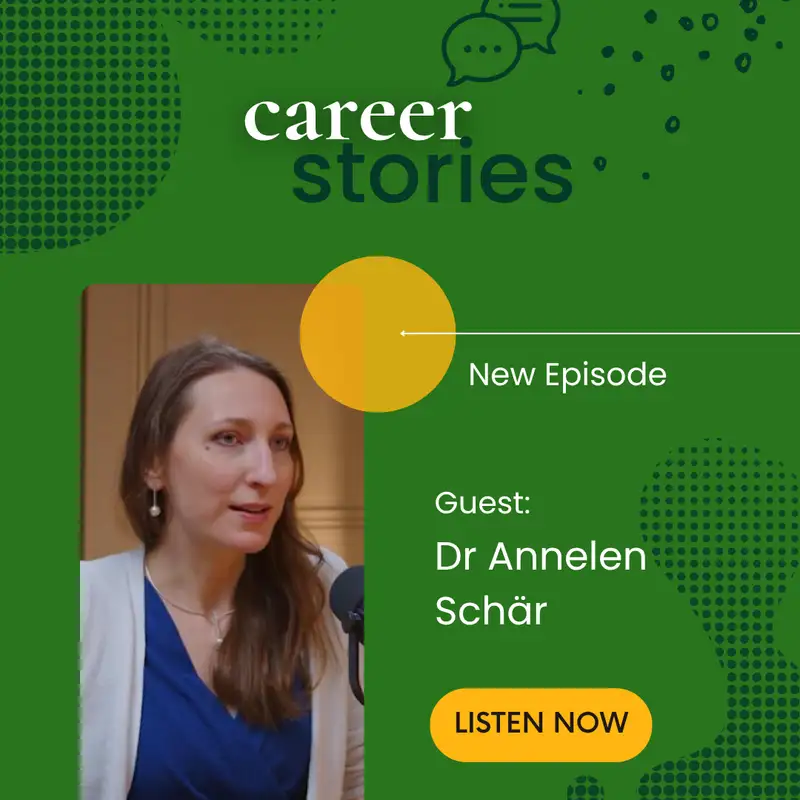
Dr Annelen Schär: Luxury Cars, Marketing Architecture and Choosing Positivity
Hello, and welcome to Career Stories, the podcast that shares other people's career stories to help you with yours. I'm Doctor. Luella Forbes, and each week, I sit down with leaders, experts, and entrepreneurs to uncover the stories behind their careers. At the end of each month, I'm joined by Associate Professor Michelle Gander to explore how those conversations might help you on your career journey. Listen every Wednesday for the latest career story.
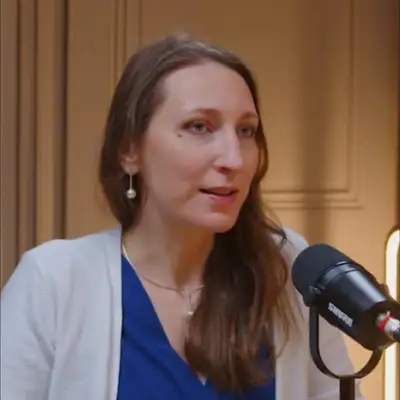
Luella Forbes:Dr Annelen Scherer is a marketing leader and researcher in the luxury car industry. Based in Stuttgart, she leads omnichannel portfolio management at Mercedes Benz and has recently completed doctoral research on the intersection between sales model, innovation, and customer experience strategy, and the importance of a single source of truth for customer data. Annelen and I graduated from a doctoral program together earlier this year. Annelen Scherer, welcome to Career Stories. Thank you.
Luella Forbes:So, Annelen, you have a very complicated job title. Yes. So I think everybody will know what Mercedes Benz is at the luxury car company. But perhaps you can explain what omnichannel portfolio management means.
Annelen Schär:It's even longer, the title. So it even includes solution management and business architecture, if you want the complete title. And to be honest, I'm just starting in this position. I came back from parental leave on the February 1 and now officially taking over this new role on the April 1. So but what I understand so far, what I'm responsible for, and I'm really, really convinced that this topic is really important for us as a company.
Annelen Schär:So I'm responsible for this omnichannel management, meaning to move forward with e commerce, but with also with the web channel in general and how this interlinks that at the end with our retailers. So it's very much our digital topics in sales and marketing to coordinate this. It's a governance role. It's a steering role. So that's one aspect.
Annelen Schär:And then the solution management, this is really focusing on the web channel activities that we're doing. And then at the end, steering the whole organization until the the developer at the end really tweaking and then developing the features that are required. And the third aspect that is also, like, very much interlinked in this, yeah, in this topic area is business architecture to ensure that when you have a process that you translate that into business capabilities and then also, like, to to have the transfer into actual systems. And you need this translation. This is quite critical.
Annelen Schär:So, yeah, I've and my team, business architects and legal architects to take care of that.
Luella Forbes:Fantastic. It sounds like it's kind of, I guess, designing how all of the sales channels connect with each other and join together to make sure that you've got kind of a consolidated and consistent approach. Yes. Exactly. Fantastic.
Luella Forbes:So what do you enjoy about working in marketing?
Annelen Schär:I would more say that I'm more part of the sales division. Oh, Oh, no, no. But this is just internal. Yeah, so I'm definitely in between. I'm part of the sales and marketing organization, so it's both.
Annelen Schär:So what I enjoy most, it's really well, I'm not in front of the customer selling the vehicles, but I'm in the background, in the very background, trying to enable and improve. And I'm now really in the digital area, how to improve the customer journey, and to ensure that the processes in the background are working to make this even smoother and faster and more seamless. So that's quite interesting. I mean, I'm also, like, part of this new, like, innovative part taking on AI and all these digital new things that are available at our fingertips. So that's pretty amazing to be part of that and to experience and have, like, companies coming in and giving us, like, futuristic talks about what's happening out there and what's possible.
Annelen Schär:So that's super interesting. And, yeah, I hope that we, as Mercedes, are part of this pioneering moment really to develop us towards the future. And, yeah, that's quite exciting.
Luella Forbes:So when you say I'm really interested. When you say digital channels, is that mostly kind of presales? Or is there is there kind of ongoing interactions that customers might have with your organization kind of once they bought a car as well?
Annelen Schär:So it's the complete customer journey. Oh, okay. So it's from, like, really awareness, consideration, purchase, but also, like, the retention phase later on. So we have colleagues that are also taking care of our online store when you want to buy tires, when you want to schedule your service appointment, and so on. So it's really the complete story.
Annelen Schär:And then retention, I mean, your lease contract is expiring, really to keep you in our whole ecosystem, that's, yeah, one complete story.
Luella Forbes:Okay. Excellent. That's the type of thing that Apple do very well, isn't That's that ecosystem. What kind of people do you have in your team? What kind of skills and capabilities do you have in your team?
Luella Forbes:So you mentioned business architects, legal legal architects as well.
Annelen Schär:Mhmm. So it's very diverse, I would say. So if people with more technical backgrounds, more with business background, so it's an even biz people with business background, they can get into more technical things. So I think it's a very broad, yeah, scheme of skills, I'd say, that they cover. But the nice thing is that they've really enriched each other.
Annelen Schär:We have our rounds together to really see, Okay, what would be useful for you, and then handing over to the next one. So it's really critical that we have the skills in total and the team, but then that we have this exchange to really make this working in total.
Luella Forbes:Yeah. Fantastic. Yeah. And so I'm interested to know how you got there. Have you always liked cars?
Luella Forbes:Did you want to be when you were little?
Annelen Schär:Well, I think when I was a child, I don't think I would have imagined something with omnichannel management.
Luella Forbes:Probably Who would have? Yeah. Exactly.
Annelen Schär:So probably I would have said, oh, I want to be a vet. So that would have been my answer. Yeah. No. I I think yeah.
Annelen Schär:It's it's it's quite a story. So I think during during high school, I was yeah. So I was playing my music, and I was thinking about becoming a professional musician. So that was one thing. And then You play?
Annelen Schär:The cello. The cello. Excellent. Yeah. And, yeah.
Annelen Schär:But then I realized, oh, to be a professional musician, I really that's it's a tough career, I think. Yeah. And then I was lucky because my older brother, he went through this study guide, like the 1,000 pages with all the study programs that are available. And he went through it, and he said, okay. I have the perfect study program for you.
Annelen Schär:I'm like, oh, what is it? And yeah, so it was a mixture between cultural studies, foreign languages, and economics.
Luella Forbes:Oh, that sounds really interesting.
Annelen Schär:That sounds really interesting. And I thought, oh, that's a fun program. And there was just one university in Germany that had that. So I'm like, that's easy choice. Yeah.
Annelen Schär:But then after the two years, you were you had to go abroad and study abroad, and I'm like, okay. So if I have the chance to talk with foreign students in English, I would always go for the English. So I forced myself to go to France and and just, yeah, subscribe, apply normally, at a friend a French university, which worked out, and I somehow survived the first year, I must say. So my French skills were very limited.
Luella Forbes:Well, I just want to acknowledge that your English and French skills are both better than my German skills. You. So thank you. Thank you so much for doing this in English because it would not have happened in German.
Annelen Schär:Yeah. But then I was so so I was in France then. And then I realized, oh, like, going back to Germany wouldn't make that much sense to learn, like, keep learning French. So I stayed in France. But and then part of my study program was also to do internships.
Annelen Schär:So I said, okay. I'd really like to do, an internship with an international company that is German based and, but ideally well known in the world. And then so I applied for Porsche, an internship for Porsche with Porsche. And, yeah, I I got that job and was I was not interested in cars before that, to be really honest. No idea about whatsoever.
Annelen Schär:And then we during my internship, sometimes we had to deliver very important documents from one location to the other, and we were allowed to take a car from the pool. And these pool cars, they're very nicely equipped, usually, like, exhibited in some fairs and and so on. So so you were, like, driving until the gate, smiling. And then you're, like, okay, around the corner. Then, oh my god.
Annelen Schär:That was so exciting. And that was the moment when I got interested really in in cars, like more the the product itself because it's such an emotional car. It's it's I think it's very different than selling and promoting screws or maybe the, I don't know, some hand cream or something. So I think it's a very emotional product. And that's when my interest started.
Annelen Schär:And yeah. And then
Luella Forbes:And it's a big investment as well, isn't it?
Annelen Schär:A car.
Luella Forbes:And and can be quite I'm quite associated with your identity.
Annelen Schär:Yeah. Yes. So depending on what car you would like, when you're really into cars, you decide on on the brand, what it stands for, and so on. So that's an interesting aspect. But then when I graduated from university, it was just like the financial crisis.
Annelen Schär:And I already had signed a contract with another company. And then they stepped back from the contract because they said, Okay, sorry, financial crisis hit us. And that was a moment when I really was quite disappointed because at that point, I had already turned down all the other offers with some big companies. And at that moment, I had to, like, start again with my job search. So that was a bit difficult, but I found a job with a smaller company than a small IT company.
Annelen Schär:I was promoted after six months, and I was like, okay. What's coming next? And then I got headhunted for to work for a tire company, so that was into automotive. But that job For Michelle. For Michelle.
Annelen Schär:Exactly. But that job wasn't as international, and, yeah, interactive as I thought. So I thought I would be talking to people, and I was more, like, in front of a computer trying Yeah. To simulate, the the tire development. And so I was like,
Luella Forbes:Okay, that's Well, tire isn't as an you described The car is the emotional product. A tire is a bit less. Yes.
Annelen Schär:It was
Luella Forbes:It's more like a screw in that context.
Annelen Schär:Okay, I never thought about that. Maybe it's more the screw. Exactly. Yeah. But at that moment, I thought it was perfect because I thought it was it's the automotive industry.
Annelen Schär:It's a French company, so it's a very nice fit. But, again, it didn't really work out for me, and I thought you're you're very much interested in the okay. What what worked out? What didn't? And what did you do to to change that?
Annelen Schär:So and that and, again, I had to decide, okay. I'm not happy with what I'm doing. I if I want something to change, I need to make the change. Right? So that's when I searched for another new job, and I've found the advertisement with Mercedes, but coming with a trainee program.
Annelen Schär:And I thought, oh, but I'm I mean, I've been in the job for so long, trainee program. Yeah. I'm like, okay. But it sounds super interesting. It was You're like 23 or something.
Luella Forbes:Or 24. Yeah. Exactly. I'm already so experienced. I don't need a trainee program.
Annelen Schär:Exactly. But to be honest, this was one of my best choices in life. So I applied. It's it's quite competitive to come to get in I'm with an assessment center and so on, but it was amazing to get in to be part of this trainee program. And yeah.
Annelen Schär:So the first, I think, eighteen or sixteen months, I forgot how long it took me, but you had the chance to to go to different places. You were in this cohort again with other trainees to get, like, your network, so that was really, really cool. And then I just had different positions within the organization. It's already yeah. So so doing the assessment center in the beginning to get into the company was already, like, quite selective, but then you it's another selection process to become a manager and then later on as well.
Annelen Schär:So that's another thing you need to go through. And luckily, it worked out for me. Yeah. And now I had, yeah, two babies in between, one big promotion in between, so that's maybe something we can talk about. And then, yeah, now I'm back.
Annelen Schär:So why am I having this job now? To be very honest, I didn't know about this until very few weeks before I came back from parental leave. But one of my colleagues, he, he applied for another job in Portugal, and he got it. So that's why I got his role. So
Luella Forbes:I'm like, oh my god.
Annelen Schär:I'm so I'm so grateful. So that was pretty much by chance that I get got this specific job now. But
Luella Forbes:Yeah. And I know that we we spoke a bit while you were on parental leave Yeah. About the uncertainty about going back to work after parental leave. Because a year or however long you even if it's nine months or whatever, be quite a long time in an organization, and they can make a lot of changes. Right?
Luella Forbes:Yes.
Annelen Schär:And yeah. And there were actually quite a few changes. So my whole division was dissolved. My department was dissolved. My successor left the company.
Annelen Schär:So there were just a few changes going on. And, like I'm like, okay. Yeah. But, I mean, I I mean, when you when you come back from parental leave, you always have a job, so that's guaranteed. So that's not a problem.
Annelen Schär:It was more like, okay. Would it be a good fit? And, I mean, I want to work, and I really want to, yeah, contribute. So that's why I was, to a certain extent, like, I was not sure what what would be coming. And but as I said, so this is a very, very nice fit to my, like, background.
Annelen Schär:It's So it's it's it worked out super perfect. I'm very grateful.
Luella Forbes:Yeah. And what do you enjoy about working with Mercedes? Because you've been there for, what, fifteen years,
Annelen Schär:something like that? Yes. September, it's going to be fifteen years. Oh my god. Yeah.
Annelen Schär:Fun fact. So I think it was on Tuesday. Yeah. I think Tuesday, we had our product forum. So that's the moment.
Annelen Schär:Though it's it's a few I think it's in total two weeks, and that's the phase when we show our deal especially it's for the dealers, right, to show the new products that are coming within the next few years to get them excited and on board and and get also their their feedback. Okay. Do you think that's something that's going to kick off in the markets and so on? And then they also invite employees and staff. So I was part of that group, and and that was on Tuesday.
Annelen Schär:And I must say, like, oh my god. So you have to imagine. So it starts so it's a big so you it's it's very top secret everything. So you enter it's like entering an airport. You need to, like, get rid of everything.
Annelen Schär:Your phone, it needs to be locked and everything. So super, super secret secretive. And then you get into the room. Everything is, like, perfectly staged, like, huge screens, like, whole, like, auditorium ready. And then it gets dark, like, in a cinema, and then they show, like, a company movie, like, just about, like, oh my god.
Annelen Schär:So that's us. And and now we are celebrating this year the one hundred fortieth anniversary of Mercedes, which is quite big. I mean, being the innovators of the car and so on. So it's it's really big thing, and I must say so with with the music, with the lights, and everything, the whole show, I get goosebumps. I was saying to Ikran, oh my god.
Annelen Schär:That's me. So I was so excited. I'm always excited about these company movies because it make it makes me so proud to be working for such an amazing brand and company and such amazing products. And now I had the chance to see, like, the the few or a few products that are coming in within the next few years. I'm like, oh my god.
Annelen Schär:I love them. I mean, to be honest, with two small children, not all the cars are perfectly, like, fitting to my fair practice yeah. The moment, but they're amazing. And yeah. So so I think it's I enjoy most being part of this organization to work for such an amazing brand for for for what it stands for, like security aspects, but also sustainability aspects that we're working on as a company, being pioneers, and and also now, like, having the option or to have the possibility to work on such digital pioneering topics as well.
Annelen Schär:So I think it's I'm just amazed, and I'm just glad to be working for this company. Yeah. So so we always say this, so you have the star imprinted on your forehead. Yes. That's what happened again on on Tuesday.
Luella Forbes:But I think that's really exciting. Like, I love I love it when I get to talk to people who really love their job because I know that kind of at the best points of my career, I have just totally adored going to work. And, you know, I love doing the podcasts now, and I feel very lucky that I get to do that. But I for me, one of the reasons why I wanted to do the podcast in the first place is because I think people deserve to have a great time at work and to really enjoy the company they work for. And in in whatever that looks like and whether you, you know, get all excited about cars or whether you wanna help people or whatever the thing is that you want.
Luella Forbes:I, like, I love seeing people, like, properly loving their job.
Annelen Schär:Mhmm.
Luella Forbes:Talk to me about the doctorate because, obviously, you and I both went through a four year, four and a half, but I don't know how long, maybe five year journey. It wasn't just four. It was just four year journey to get our doctorates. Why was it important for you to do a doctorate? Why did you wanna do one in the first place?
Annelen Schär:Mhmm. That's a good question. So I think I've always wanted to get a doctorate degree, but I didn't want to go into science, into academics. So I always wanted to have, this practical context. Yeah.
Annelen Schär:And and I think I I got into, like, my jobs, and then I continued working. And then, yeah, probably for a lot of people, COVID was a time when you started reflecting, okay. Is this what I want? Are there any, like, dreams in my life that I still wanted to achieve and accomplish? And that was the moment, when I started looking into programs.
Annelen Schär:Yeah. And, I mean, had yeah. I just looked into and since I studied in France, I thought I should go for a program where they can really, like, judge on my university results. So that's why I chose this double degree. And yeah.
Annelen Schär:So I did this really for me. But, again, I had the chance to get support from my company. So they yeah. So they supported me from a from a management perspective, but also, like, financially. That was really great.
Annelen Schär:They could have, yeah, finished this program.
Luella Forbes:Yeah. I did mine for me as well, to be honest. I think that I just really enjoyed the learning. And for me, it was about trying to understand the job that I do better Mhmm. And to try and get get better at doing it.
Luella Forbes:And and like I said, for me, because I like learning and I wanna be good at what I do, not really for any other reason, but it's been a really interesting journey, I think.
Annelen Schär:Mhmm.
Luella Forbes:Do did you do you think you've learned anything through doing the doctorate other than the actual topic you researched, obviously? From the process from the process of doing the doctorate.
Annelen Schär:Yes. And I must also say, like, my my supervisor, he the one from from from England, he was amazing. I think I wouldn't have made it without him in such a short time, to be honest, to really, like, get me, like, working on some things, reflect, challenge me. So that was really part of it. So what did I learn?
Annelen Schär:Yeah. So definitely one thing I don't I don't know about you, but the most difficult part for me was the critical literature review part that was difficult. That was my favorite bit. Really? Okay.
Annelen Schär:Because I was like, okay. So I have this somehow predefined opinion in my head. So I looked for sources that would confirm what I already thought that I would know. Right? And that was really, really one thing to overcome this and really explicitly search for sources and and people who might be contradicting or have, like, some other views on the things.
Annelen Schär:So I think that was very valuable, so I learned that. And also the aspect of, of course, like so the so my topic was about an internal, very complex process and to really be able to slice down this complexity and come up with a result. I think in the beginning, you're just overwhelmed with, like, this huge thing, this monster riot to It's
Luella Forbes:it does feel a bit like that sometimes. I I've kind of feel like, for me, the one of the big things was actually almost like a determination thing that you have to be really determined to keep going because it quite often can be really overwhelming and big. And every time you think you've broken through on a particular topic, then you call your lovely supervisor, and they go, no. No. I think you're wrong on that.
Luella Forbes:And you're like, no. I oh, I thought I had it now. Yeah.
Annelen Schär:Yeah. Yeah. Sometimes it would also be so I would write something, and then I thought, oh, I mean, I really did my best now. And then you get the feedback, and you're like,
Luella Forbes:oh my god. There is
Annelen Schär:such a long way. Or sometimes I wouldn't understand the feedback that also happened. And then I had to have a like, schedule a meeting so to really understand what yeah. He thought he thought. So
Luella Forbes:Do you do you think that it's added any value? I know that you're only recently back to work. So do you think it's had a added any value to your career?
Annelen Schär:Yet. Yet. So there I don't think there's an immediate impact saying, okay. I'm I'm doing now, like, stepping up the ladder or anything. No.
Annelen Schär:But, I didn't expect that or I well, because I think an academic title doesn't make you a better leader or, a better manager. Also, the aspect of using AI. I mean, like, during my during writing up my my dissertation, I really used, like, the basic stuff for rewording, maybe structuring, so really the basic stuff. But but now I'm asking everyone, okay. So how can we use AI, like, on a on a very, like, broader scale, to increase productivity and and so on?
Annelen Schär:So I think that, definitely helped. And then I think it's also good, yeah. I mean, it's a huge achievement, right, to finish a doctorate degree? It is. And so I think it's it's helpful for your confidence.
Annelen Schär:Yeah. So I think that's that's important. And you somehow have the official proof that you have the intellectual and analytical capabilities to really get to the bottom of a problem and to solve a problem. And I think it doesn't hurt you in a discussion because you're also perceived maybe maybe differently than before. But that's just There's like a credibility.
Annelen Schär:Yeah.
Luella Forbes:It's a credibility.
Annelen Schär:Yeah. Exactly.
Luella Forbes:Yeah. And I I agree. And I think that I think the the other thing that so I think determination is one of the things I learned that it's about actually real persistence and kind of knuckling down and working through something. But I think the other thing is that it's not it it made me realize how not smart I am, if you know what I mean, and how much more there is to know. Mhmm.
Luella Forbes:And because the more you read, the more you realize that there is nuance and different perspectives and kind of the more the more you realize that there's so there's so much more to know about everything. And I find that kind of empowering in a way that sort of says, well, I'm an expert on kind of this tiny bit, but that doesn't mean that I know everything.
Annelen Schär:Mhmm.
Luella Forbes:That just means that I know this thing, and I've tested it. And but we could go and do more tests and find out more stuff about it. I find that quite exciting.
Annelen Schär:Mhmm. Mhmm.
Luella Forbes:Okay. So two general questions for you then. What's what do you think has been the most difficult time of your career?
Annelen Schär:I think the the time between Michelin and going to Mercedes, because I, so so in as I said, so after university, I worked for a company, then I changed, I think, after one and a half years, one year. And then I started with Michna. And then I realized after a short period of time, it's not a good fit, in terms of tasks. And so it was the combination of, yeah, two two aspects, and I think that was a quite difficult time. But as I said, I mean, it's it's the point to realize that, like, what what what are the what are the issues?
Annelen Schär:Yeah. So I think that stepping back, getting back on your feet and and changing and, like, yeah, being the change. Right? So that was, I think, difficult. After that, it's not that everything comes to you, like, super easily.
Annelen Schär:Right? So also, I worked for Mercedes, there were times I was disappointed maybe that things weren't going as fast as you when you're, like, super young think, oh, I mean, why why aren't things moving? But there are so many other people who are very good and talented. Right? I mean and then there and there is a certain funnel, and you you need to go through it.
Luella Forbes:And I I think sometimes as well, when you're young, if you're smart, and particularly if you're quite maybe strategic, you end up you kind of can't be in those strategic roles because you don't have the experience. But you might have some of the smart to do it. And I know for me that when I was in my 20s, I got quite frustrated sometimes because I could see the thing that needed to change. But I wasn't in a position to do it. And you know, you your managers are kind of like, oh, yes.
Luella Forbes:But you're not you're not senior enough to Mhmm. Kind of participate in that thing yet. And I'm kind of like, no. But if if I promise you, if you did it this way, it would be better. Sometimes you do have to get that extra experience.
Luella Forbes:So you can have the the smart the smarts and the instincts and then taking the time to get the experience. I look back on that now and kinda go, they were probably right that I probably did need a bit more experience, But that doesn't mean to say that I didn't have a good idea. Yeah. Do you know what I mean?
Annelen Schär:Yeah. I think I know what you mean. Yeah. And I can totally relate to that.
Luella Forbes:Yeah. Mhmm. What do you think are the strengths that have made you successful?
Annelen Schär:That's an interesting question. I think well, it's always the question, like, do you define as success, right? But I mean, I feel quite successful now that I'm on this like, management level and that I'm still managing my family in the background somehow and that I finished my doctorate. So what are the strengths? I think one is definitely perseverance, not giving up that easily.
Annelen Schär:Yeah. Having somehow a plan, but not being stuck on this very fixed idea, but you can still navigate. And I think it's also a question of resilience that you just get up, and then whatever so I also believe that whatever comes is the right thing. Right? So if something doesn't work out, I don't oh, I'm I'm not, like, I'm getting, like, like, really down or anything.
Annelen Schär:No. No. No. I I believe, okay. Then then it's the right thing that I didn't get, for example, this job or I didn't whatever.
Annelen Schär:So I I'm always positive. So I think and I and this is also something very consciously chosen. I want to be positive about things, about my life. I want to have this positive attitude because I think it really, yeah, makes you happier and also has a positive effect on everyone around you.
Luella Forbes:I think that there's evidence about that as well from a leadership perspective, that there is evidence about how that mindset that you have I'll try and find the research. And I'll put a link in the show notes for people. For me to read too. But there is a thing about so that's why, for example, if you heard of gratitude journals where people write things they're grateful for. Or that's the reason why they actually there's evidence that they work is because by being grateful for things and being positive about things, you actually kind of rewire your brain to make yourself more positive.
Luella Forbes:And absolutely, that impacts on the people around you. So well done. Well done. So how do you manage your mental health? Particularly over the last four years?
Luella Forbes:You've been managing a doctorate. And you've also had two babies, two lovely babies in that time. And in a job, that must be quite stressful sometimes. How do you manage your mental health and your stress?
Annelen Schär:I think there is not just one thing that I'm doing. So usually I do pilates, like, on a regular basis, but now I've really like, in the beginning of this new job, I really need the the extra time that I would spend on this on sports on on get on understanding the topics. So but I what I definitely do, and this is also very consciously chosen. So when I get home, I am there for my children. It's very few hours that I have with them that they're awake.
Annelen Schär:So I put away my phones, and I just want to spend and enjoy time with them. And that's also just because they're so small. I mean, my older daughter, she will turn four in a few weeks. And the small one is one and onetwo. So they're just so incredibly happy.
Annelen Schär:You're never as happy as when you're such a small child. So I'm and and being part of this, that's definitely good for your mental health.
Luella Forbes:It's very easy to be present with children, isn't Like, to to when you're actually there with them, it kind of because my niece and nephew are about the same age as your babies. And going and spending time with them, it's kind of like you go in this little bubble where you're, I don't know, talking about Peppa Pig or Bluey or something for hours. And it's so meaningful. Yeah. And it feels really important and meaningful.
Luella Forbes:And then you emerge. And you're like, oh, I've lost all of this time. Yeah. But, yeah, it's really I think that's really good for kind of your mental health as well, like you're escaping from stress.
Annelen Schär:And the other thing, I cannot do that often because I leave my husband then with the children. But I already also sent you the picture. So last Sunday, I had a big concert. So I'm trying to play music because that's also I mean, you're you're super busy while playing, but that's also some completely it's it's it's using your brain in a completely different way. And
Luella Forbes:Well, it's quite meditative, isn't it? Yeah. Because you
Annelen Schär:You're in a flow.
Luella Forbes:Because you have to concentrate on the music you can't kind of think about.
Annelen Schär:That's also my flow moment. I think so these two aspects. And then in the future, also a bit more sports. But
Luella Forbes:Yeah, I think we all want to you mentioned it earlier about success. And you talked about kind of feeling success now. Do you have a view of what success means to you?
Annelen Schär:Well, I think one aspect is definitely like managing my family that everything is working and really like meeting the the small bubble that that we are. Yeah. But also, I mean, it's for me, success is to to to finish a task, to be successful on a project, to celebrate with the team. I love celebrating. Like, team success, I think that's that's so much fun.
Annelen Schär:And I think it's important to celebrate and and do that. But if but the other thing, as I said, I think I'm also proud and happy that I'm on this management level now. So I think this also is part of my definition of success to reach a certain point or level in your career. And yeah, so I think it's multifold somehow, this definition of success for me personally.
Luella Forbes:And sounds like it's also about a little bit trying to be happy where you are. Yeah. Not always looking at where you're going. So having, as you said, having a bit of a plan, but also trying to be happy where you are as Yeah. So you've talked about it a little bit.
Luella Forbes:But how has being a parent impacted how you work?
Annelen Schär:Different hours. Yeah. I'm not sure if it's really, like, motherhood that changed me. Right? Yeah.
Annelen Schär:So it was more probably doing the the doctorate, in parallel to having a small baby or two small babies than, than the work because that's really when you have to focus during a very short time. You and maybe had had, like, half an hour or one hour or, I don't know, in in, like like, in the middle of the night or sometime early in the morning. And it's really, like, to get this this concentration. So and you need and you have need to do this now. Not just, okay.
Annelen Schär:So I need to set up something and slowly and take one hour of routine, and then you get into the task. No. No. No. It's like now you have the thirty minutes, and you have to get in.
Annelen Schär:And I think that's something, you need to force yourself. Right? It's always easier to stay on the couch. But you need to force yourself to get, really the focus and then get going. I think that's, and and I think that's that's a lot of parents, and I'm not saying just the mother, but for parents to say, okay.
Annelen Schär:I have this very short of time. I need to I need to finish. I need to pick up my children, so I really need to finish by then. So there's this limitation and to be more efficient with your time. I think that's
Luella Forbes:yeah. That must have been really hard because I know that I I felt like I needed a bit of time to get in Mhmm. Get into the topic each time. And so to go kind of from nothing and then go straight in must have been really difficult. So we might have already covered this, but what does work life balance mean to you?
Annelen Schär:Yeah. I think it's definitely having the time to spend with my children and playing music. And and when I say with my children, of course, with my husband and and so that we have time together because I think that's the most memorable time later on that I will remember when we were young and still could do things. Yeah. With the children.
Annelen Schär:Yeah. I think that's really the most important aspect. And then having something just for me, and if it's just the the playing, as I said. And it doesn't have to be like every day. I don't play as often these days.
Annelen Schär:But to have these moments of like pure flow, just me and the music. Yeah. Love it.
Luella Forbes:How do you think your upbringing might have shaped your career?
Annelen Schär:So my dad, he was a professor at university. So I think that definitely impacted my wish to get a doctorate degree. So that, definitely. And, yeah, I mean, both my parents, they were into, arts, music, culture in general. So definitely that's something I think that for me, it's a big present they gave me because I enjoyed it very much.
Annelen Schär:Even, like, having the chance to learn an instrument, I think that's, I feel quite fortunate that they didn't let me go up until you can play a little bit because I think to to get to that point is quite difficult and that I didn't lose my interest. Yeah. And then I had during high school, I had the chance to go abroad for one year, to The US. I think also to get that chance was, like, broadening my horizon. I really got the independence.
Annelen Schär:I mean, with 15, I was out of my parents' house, and I had to survive. Back then Amazing. Yeah. Back then, I mean, yes, email But no
Luella Forbes:Not in the same way.
Annelen Schär:Not in the same way. Exactly. So it was difficult, like, moving out. Yeah. And then also with my studies, I was completely free to choose anything.
Annelen Schär:They supported me. Yeah. So I think I had so many options. Yeah, I think that it had a big, big impact on my life and what I am now, definitely. Yeah.
Annelen Schär:Fantastic.
Luella Forbes:So we're going to go through some quick fire questions. What is your coffee or tea order?
Annelen Schär:I drink neither. Very boring. So I usually drink water, but I'm now slowly getting into matcha and this Oh. So I don't have my special order yet, but I'm getting more into that.
Luella Forbes:Would you rather work from home or in the office?
Annelen Schär:I think I'm very much into going to the office. Unfortunately, traffic hits me every day after dropping off my children. So sometimes I'd say I'd rather go back home. But I really, really enjoy being at the office because I love the interaction. It's so enriching and so nice.
Annelen Schär:I'm I love being with people and actually in the room because I think, me as a person, I have the biggest impact and and positive impact on on people and team settings when we meet in person. But I totally understand. And and, yeah, on thirst on Thursday, yeah, in the morning, I was getting my my my older daughter ready. And she was like, oh, my tummy hurts. I'm like, oh, yeah.
Annelen Schär:A little bit of rubbing, and then let's get dressed. And she was feeling, oh, man. I'm like, it's getting lighter. Okay. Do you want some tea?
Annelen Schär:And then at some point, she had to throw up. And I'm like, okay. Just write it. Okay. Cannot come to the office.
Annelen Schär:Calling my husband. Can you please come home? I have two children. Yeah. So that's the moment, when you just, cannot, really choose and when you have to stay at home and work from home.
Annelen Schär:But, yeah. So more office, but, this flexibility is amazing and especially Makes a big difference, doesn't it? Yeah. With traffic and and and having things to organize at home, I mean, yeah. Looking great.
Luella Forbes:Are you an early bird or a night owl? More the early bird. Are you an introvert or an extrovert?
Annelen Schär:Interesting question. I think I'm neither. It depends on the situation. I don't have to be dancing in the first row, depending on the situation, but I can dance in the first row. So if I say, okay.
Annelen Schär:I want to mingle, meet new people. I'm totally an extrovert. I can just approach anyone. But in other situation, I'm like, I'm just fine just here sitting and not talking.
Luella Forbes:Do you get your energy from being with other people or being by yourself?
Annelen Schär:Again, depends on the people that I'm with. Yeah. Okay. Interesting.
Luella Forbes:There is actually new research that there is a a different type called outrovert.
Annelen Schär:Outrovert. Which So has it does exist. So
Luella Forbes:it used to be introvert and extrovert. And then there's a theory come along that there's now a third alternative, which I think I probably also fall into that bracket. So communication style, do you prefer using email, Teams, or a phone call?
Annelen Schär:In purse Or in person. In person. I prefer in person.
Luella Forbes:Do you prefer using Microsoft Word, Excel, or PowerPoint? Excel. And is there a career a piece of career advice that has shaped your thinking?
Annelen Schär:Not sure if it was really an advice, but I think to create a network is really important. And, so so coming back to this introvert extrovert, I don't have the biggest network, but I have some, like, important people, not being, like, certain level, but just interesting personalities, things you can learn. So I think it's it's building a a network of relevant people. I think that's something that I learned.
Luella Forbes:And then finally, what are you proudest of in your career?
Annelen Schär:Proudest of in my career? I think I'm proudest of getting the promotion to the management level I am now at. Yeah.
Luella Forbes:Fantastic. Annelen Scherer, thanks so much for joining me today. I've loved hearing your career story. Thank you. If you enjoyed this episode, please like and subscribe in your podcast app.
Luella Forbes:It helps other people find us. And join me and Michelle Gander at the end of the month for our reflections on this conversation and the rest of this month's career stories. This podcast was produced on Noongar Country. We acknowledge and respect the first storytellers of this land and the keepers of culture and extend that respect to traditional owners and storytellers wherever you may be listening. And
Creators and Guests