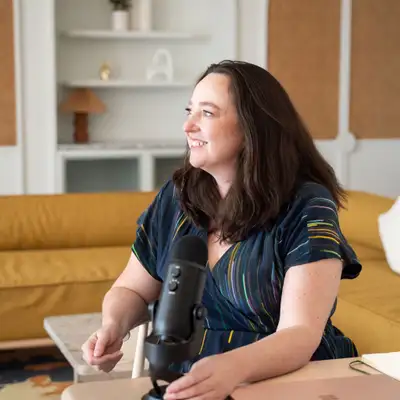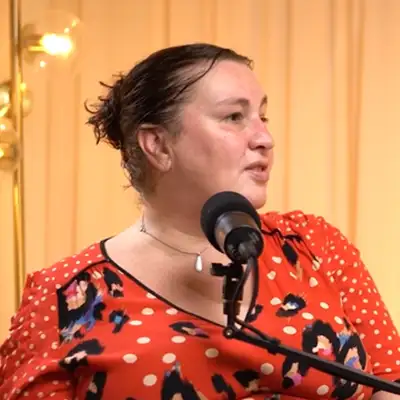
Jo Lindsay: Building a career at one organisation; Leading through change; The Opportunity Mindset
Hello, and welcome to Career Stories, the podcast that shares other people's career stories to help you with yours. I'm Doctor. Luella Forbes, and each week, I sit down with leaders, experts, and entrepreneurs to uncover the stories behind their careers. At the end of each month, I'm joined by Associate Professor Michelle Gander to explore how those conversations might help you on your career journey. Listen every Wednesday for the latest career story.
Dr Luella Forbes:Jo Lindsay is a managing director of Reed Talent Solutions, a part of Reed, the world's largest family run recruitment business, which helps companies recruit across Europe, USA, The Middle East, and Asia, as well as providing a range of complementing services like recruitment process outsourcing and learning services. Jo was my first proper boss as a 21 year old and was the first person to really see me at work. I learned a lot from Jo that has helped me throughout my career. And so I'm really excited to introduce her to you today. Jo Lindsay, welcome to Career Stories.
Jo Lindsay:Thank you very much, Luella. I'm not sure whether that's nice things that you've said about me or whether you've just made me sound really old, but I wish your first parts when you were 21.
Dr Luella Forbes:No, they're nice things. You much older than me. You are much older than me. So your job is one of the managing directors of Reed I Talent know you've got a range of responsibilities in that job. Perhaps you can start with the organization first.
Dr Luella Forbes:What does Reed Talent Solutions do and who for?
Jo Lindsay:So Reed Talent Solutions is a workforce solutions business. That means predominantly we support organizations with their hiring requirements. So sometimes that can be contingent worker focused, so temps, contractors, statement of work, so kind of into the consultancy space. And other times it can be permanent recruitment solutions, so organisations that are coming to us and asking us to basically recruit their staff on their behalf. In terms of markets that we operate in and who some of our customers are, we operate both across the public and private sector.
Jo Lindsay:We work with a lot of local authorities, for example, which gives us the opportunity to recruit a whole host of skills and types of roles because you can imagine local authorities do everything from social care to financial planning, say for example, for We also work heavily within the utilities space, so we work quite a lot with water companies, gas, electric, other utilities providers as well, which again gives us the opportunity to support in areas such as tech and engineering in particular.
Dr Luella Forbes:Yeah. Fantastic.
Jo Lindsay:So, yeah, it's a really broad brush set of clients that we work with. Most of the clients we work with in Retailer Stories are actually UK based, Although obviously as the wider group, do operate in all of those territories and regions that you talked about. But my focus is very much on supporting UK hires.
Dr Luella Forbes:Yeah, fantastic. And so the difference between the Reed branch network and what you do is volume?
Jo Lindsay:It is volume, but it's also the process. So you alluded to in your introduction that we do something called recruitment process outsourcing. Yeah. And that's very much where an organization comes and asks us to be either part of their recruitment function or take on part of their recruitment journey for a candidate. So for example, they might ask us to source candidates, select those candidates using things like psychometrics or interviews.
Jo Lindsay:They may ask us to onboard those candidates and reference and check those candidates or indeed do any part of that process discreetly. The wider read business is probably what's more traditionally known as an agency model. Yeah. Where actually an organization will come to them with a specific job, and they will ask them to just source candidates for them. So it's very much about them doing the attraction and bringing the right people into the process rather than actually managing the process in its entirety for the customer.
Jo Lindsay:So that's the real difference between those two parts of the Reed business.
Dr Luella Forbes:Yeah, fantastic. And so your role is managing director. But you're one of many multiple managing directors. What's your specific area of responsibility?
Jo Lindsay:So my specific area of responsibility is looking after our consultancy business. Now, from a consultancy point of view, we have two sort of key streams that we offer consultancy in. One, which for a business like Reed that has a rich heritage in recruitment probably doesn't come as a surprise, which is very much in a talent advisory space. So we're talking to organisations about things like their employer value proposition, for example. We're talking to them about maybe their equality, diversity, inclusion, belonging strategy.
Jo Lindsay:So really things that support their proposition and their employment proposition as part of a recruitment, you know, led or themed contract.
Dr Luella Forbes:So how do you attract people?
Jo Lindsay:Yeah. How do you attract people, retain people, develop people into roles within their organization? The other area that we basically focus on from a consultancy point of view is actually in relation to digital change and transformation. So again, a lot of the projects historically that we've been asked to get involved in as a recruitment provider over the years have been things which actually supporting organisations with their tech hiring. And that tech hiring is really involved to sort of say, how can organisations outsource that element of that tech delivery.
Jo Lindsay:So rather than us just providing people, we can provide a wraparound service that says we don't just provide the people for a project, we can provide the project management office, for example. You know, we can provide the risk and governance compliance around that as well. So it becomes a much more outcome driven project for a customer in terms of where they're spending their money than maybe a traditional contingent worker program. The nice analogy I often use to explain it in simple terms is, imagine if you were getting your roof fixed at home, you wouldn't invite a builder up onto the roof and basically let him have a look and then charge you by the hour to fix the roof. You'd let him have a look at the roof and then you'd get a fixed price from him.
Jo Lindsay:And that's really the difference between how an agency model, again, would work in terms of temps and how our consultancy model would work. We're happy to fix the roof for a fixed price.
Dr Luella Forbes:Yeah. Fantastic. And Reid is interesting because it's a family run business. It was founded by Alec Reid in 1960. And I was sorry to see that he passed away at the end of last year.
Dr Luella Forbes:And I know that his son James is now chairman and CEO. How do you think it being a family business kind of plays out in the workplace?
Jo Lindsay:I think it brings a lot of positive traits to the business. And, you know, one of the things we'll talk about later, obviously, is probably my tenure with the organization as well. But it's primarily what it's brought to the business is one of the key reasons I've stayed. And I think one of the things we saw and very prolifically during COVID was that because it's a family run business, effectively, the shareholder group that it needs to deliver value to is actually the family itself. And therefore, it doesn't have a necessity, you know, with a true PLC or perhaps with those VC backed organizations that it has to deliver either immediate shareholder value or shareholder value at the expense of long term vision of for growth.
Jo Lindsay:So what that meant, for example, in lockdown and in during COVID times was actually the business was able to make decisions that were about the long term stability and investment of that organization. So you you can imagine recruitment was hit really hard in terms of, you know, organizations just mean, they didn't have their existing staffing, let alone bringing in new staff. So, you know, recruitment companies had to make a lot of cuts and they made deep cuts and the cuts weren't as deep in readers perhaps they were in some of the competitors. And what that meant in terms of bouncing back was that you're obviously in a position that we were able to respond when the market did come back and it came back in in anger kind of thing. You know, we were able to take advantage of that.
Jo Lindsay:So I think that that kind of long term investment profile, think is is, you know, is a good and a positive attribute of working for a family run business. I think the other key thing for me is the fact that you're able to embody gen genuinely, I would say. And a lot of organizations look to deliver this interestingly through their, you know, their EVP. You know, they're looking to say, this this is what we stand for. These are what our attributes are.
Jo Lindsay:And I think it's easier to do that when you've got that focused around the ethos of a family. And so I'll you two examples where I think it plays out for Reid. First of all, in the fact that 18% of the business is effectively owned by a charitable trust. Yeah. Right.
Jo Lindsay:So you're actually able to reflect that that desire for philanthropy actually through the construct of your business and do do something that matters and and, you know, bring that to to life actually for the people who worked in the organization itself. So James likes to tell us, for example, that one day a week we all work for charity. I think the second thing that's played out in again in terms of the attribute of the owner and particularly Sir Alec and James is the entrepreneurial spirit that exists within our business. And, you know, that means that, you know, we're not afraid to try new things, you know, no such thing as a bad idea. And that makes it, you know, quite a creative and innovative place to work.
Jo Lindsay:And I think, you know, that again is something that I think a lot of people aspire to because, know, we all want to be challenged, want to have fresh new ideas, new opportunities in our careers. And again, you know, that's something that I think is particularly unique if that is the ethos of the family. And then you can reflect it in the actually how we live and breathe and work every day in our jobs.
Dr Luella Forbes:Yeah. And I think the obvious example of that for Read was reed.co.uk, which at the time was the first online recruitment platform in The UK. And you can see that that kind of adventurous spirit in the decision to do that. And obviously, that became a huge recruitment platform for The UK.
Jo Lindsay:Absolutely. I mean, it even predates me, I believe it goes back to 1995. So, yeah. But yeah, absolutely that. And then later in its iteration, actually, as reed.co.uk had a product as part of its portfolio that was called freecruitment.
Jo Lindsay:And, you know, that again was was kind of a on the face of it sounds a little bit of a wacky idea where we actually allowed organizations to advertise their roles for free on our job platform. But what that obviously did was it actually built mass in terms of, you know, that being the place to advertise your jobs and was absolutely critical to then going on and commercializing the opportunity later. And I guess, you know, that's an example of where, you know, you can you can be a bit more fluid and make some, you know, some different decisions again to that would possibly be made in a non family run business with with that shareholder or that VC return needing to be made.
Dr Luella Forbes:Yeah. Exactly. So what type of thing do you do each week?
Jo Lindsay:So I talked about my role as looking after consultancy. I also look after our proposition to the marketplace. So our client engagement and client acquisition strategy, which is a very fancy way of saying sales. Sales. So my my weekly activities range from everything from going on presentations or pitches to our customers for the types of products that I've previously described within this within our discussion today.
Jo Lindsay:I'm involved in setting the strategy for the business in terms of what markets we choose to to progress in. So the class answering some of the classic questions in sales of where to play and how to win, for example. I manage the teams that actually deliver that on the day to day activities. So that both involves, if you like, technical support for those teams, but also pastoral care of those teams as well. So, you know, lots of HR activity to support the people in those teams.
Jo Lindsay:And then on the consultancy side of things as well, I've got big focus because that's a growing element for our business actually about setting the commercial strategy for that business. So again, thinking about, you know, where our where our pricing strategy sits, for example, you know, looking at different opportunities to to manage our cost base more appropriately. So good example be this year, we've had quite interesting project on the go where we've looked at where we can offshore some of our roles to a new shared service center, which we've opened in a place called the Bretsen, which is in Hungary. So again, you know, that's been a ongoing project in terms of, you know, looking at, as I said, maximizing our profitability in some of our operations as well. So it's a really interesting job because I get to do lots of different things.
Jo Lindsay:And probably something I should mention just because I'm quite proud of it is I have two children and I've been supported or lucky enough to be supported with flexible working, which means I only actually work four days a week. I try to juggle all of that in the four days a week that I have.
Dr Luella Forbes:Yeah, fantastic. And in terms of the skills and capabilities you look for in your team, kind of who makes up your team?
Jo Lindsay:So on the consultancy side of things, we've got a mix of what I would call technical experts. So people who have genuine intellectual property in the types of projects that we deliver. And, you know, and that could be, for example, in discrete disciplines like project management on the IT side of things. It could be, you know, really technical expertise in the fact that they've, you know, worked with particular platforms before, say, example, or they have particular skills around things like, you know, cloud infrastructure or cybersecurity or something like that. On the flip side, in the sales team, obviously, we're looking for people who have an ability to storytell is probably what I would say in terms of, you know, it's it's not a transactional sale.
Jo Lindsay:You have to go out and identify in a consultative way what the client's problem is, and then be able to diagnose that problem and apply a solution from, you know, what is a toolkit of solutions that we have as a have as an organization. So that ability to, you know, show empathy to a customer's challenges, ability to build relationships, ability to position oneself as a partner of trust. They're all skills and attributes that I would look for in in the sales function. So it's it's kind of two different sides of a coin, really. One is one is very technically based and one is very sort of skills and kind of experience based as well.
Dr Luella Forbes:I really like the description of storytelling there because I think that that's really important. Because I think when you're doing sales because I've obviously spent some time in consulting doing sales as well. What you're really doing is talking about the type of thing that you can do with somebody who needs a problem solving and whether trying to figure out whether you can solve their problem for them. And if you can't, then you can't. But if you can, then you're kind of trying to tell them the story of how that might work.
Jo Lindsay:Yeah. And I think it's interesting because obviously this will sit for you as well, you know, when you're in that position where you're offering consultancy, you are the expert, you're bringing your intellectual property to the table. So your ability to to frame that through the context of their problem is actually where, you know, that fruitful consultancy relationship comes together. Know, they've got a problem and actually you've got the means to solve that.
Dr Luella Forbes:Helping them think about the things that they might not have thought of as well. So that's what you do now. Let's talk about how you got there. And you've already alluded to the fact that you've been at Read for a long time. So before we get to how you joined Read, what was it that you wanted to do when you were young?
Jo Lindsay:When I was young, and this is gonna sound a bit wacky now considering where I've ended up, I wanted to be an astronaut.
Dr Luella Forbes:I think
Jo Lindsay:that's brilliant. So and I I this idea of becoming an astronaut stemmed from a very cheesy nineteen eighties movie called Space Camp where Fantastic. They accidentally launched a load of kids into space on the shuttle. And I just got absolutely obsessed with this movie. And then I was lucky enough to go on to holiday to Florida when I think I was about 12.
Jo Lindsay:And I visited the Kennedy Space Center and I was just in awe of it all. It was just absolutely amazing. And it was just it was, you know, that was my ambition at that point in time is that I wanted to go to space.
Dr Luella Forbes:I love it. So that didn't work out for you though.
Jo Lindsay:No, no. And to be fair, I probably didn't take the right A levels was part of the challenge. I'm not sure they're ever going to take someone to space with A levels in history, economics and French. It's probably not a career defining choice there.
Dr Luella Forbes:So did you go to university?
Jo Lindsay:I did. I went to university and studied economics. Probably I chose economics because it was a, I think a good generalist degree. And also, if I'm honest, was pretty inspired by the teacher I had at a level. So it was kind of like, you know, I'd I'd really enjoyed the subject.
Jo Lindsay:So it kind of ticked it ticked two boxes and, you know, it it felt like it was, as I said, a a general degree, but one that would be, you know, regarded in enough esteem that it wouldn't preclude me from doing any roles outside of vocational roles that you obviously already made that decision if you can do those types of courses at university.
Dr Luella Forbes:Yeah. Pretty flexible, I think. So then when you left university, what happened?
Jo Lindsay:So I left university and I'd applied for quite a few roles on graduate schemes in sort of like, you know, the winter time when those kind of applications had to be in. Again, I'm showing my age now. All of those applications were paper application form. So there was lots of filling in of personal statements and that kind of thing in very small handwriting to be able to
Dr Luella Forbes:get everything Squeeze the word in.
Jo Lindsay:Yeah. Get everything down into a really small space. And for whatever reason, and I really don't know why now, I'd had my head turned by HR and quite often, and I don't know if this is still the case really, but quite often you were asked to pick a stream when you applied for a big graduate program. So it was kind of like, you know, do you do you pick to go into the IT stream or do pick to go into the HR stream? And I felt HR was something I wanted to do.
Jo Lindsay:And I'd done a bit of investigation into the professional qualifications in in the HR world, which is obviously the CIPD qualifications and, you know, and that that felt like a a good next step as well. So those were the kind of roles that I started applying for. And I wasn't successful. You know, it was very competitive time. So we're talking 1997, you know, it was it was kind of a bit of a a watershed moment, I think, for the economy.
Jo Lindsay:Obviously, we just had the election of, you know, the the labor government, you know, things were really changing. So there was a step change in terms of, you know, the market as well, but it was still very competitive. We were coming out of a, you know, what had been a difficult time, I think, for, you know, unemployment and particularly for young people getting their first step on the on the job ladder in the in the mid nineties. I then started to look, I guess, a little bit further afield. And one of the things that then appealed to me, I applied for the Reid graduate program, so it was a graduate program I applied to at Reid, was that it had a HR element to it in the fact that they were gonna sponsor me for a CIPD qualification, which was really appealing so I could see some sort of long term value to it.
Jo Lindsay:But interesting, it was a three year program and it had six six month placements within it. And all of a sudden that opened my eyes up to maybe I didn't know whether I want to do HR or not. And maybe actually this was a great opportunity because it would give me the opportunity to try out other specialisms and activities. So I applied to that and I was successful in getting a place on that graduate program. So I I sort of had a, I suppose, a summer of excitement where I did a bit of traveling and whatnot, and then knowing that obviously I was coming in a job to start in in the October after I finished uni in the June.
Dr Luella Forbes:So normally normally in this bit, I ask people how they ended up in in the job they are now, and people talk about moving to different organizations. Mhmm. And obviously, that's not been the case for you. You've stayed in the one organization all the time. So I am interested to know what your path was.
Dr Luella Forbes:Perhaps you can also talk about what has kept you at Read over that time. I know you've talked a little bit about values and how important that's been to you. So you joined as a grad and you did your six month rotations.
Jo Lindsay:Were
Dr Luella Forbes:there any of those that you particularly loved?
Jo Lindsay:There was one I loved, which was where I actually I actually ended the graduate scheme in sort of month three, I think of the third year. So I kind of did two two and a bit years on the graduate scheme. And the one I ended up loving was project management, which in a way tells its story actually about the grad scheme, why I've stayed at Reed and the thing I loved. And what I enjoyed about the grad scheme was and what appealed to me was this idea of you could do six different things. So you weren't in the same role and you weren't facing the same challenges every day.
Jo Lindsay:Project management is exactly that. A project can be anything. So mostly today, and I can remember a project that you and I worked on, we were helping or setting up a project for people in Scarborough that built buses to basically retrain and move into new jobs because that wasn't gonna be an opportunity going forward. And then mostly the next week, I could have been, I don't know, setting up and designing a recruitment process for a large retail bank, you know, or another project I worked on was the establishment of another one of the Reed brands, which is Reading Partnership, which at the time was predominantly a welfare to work program. So, you know, there was lots of stuff to do and a project could be anything.
Jo Lindsay:So that was really attractive to me as an individual.
Dr Luella Forbes:And I'm smiling because that's why I love working in projects too. The variety that you get, the challenge, and the fact that the project's always in a different state. So, you know, you start something and the work you need to do is different than the work you need to do in the middle and the work you need to do in the end. Like, it's different every single day.
Jo Lindsay:It is different every single day. And I think the thing that also appealed to me at Reid, and it's it's kind of almost a little bit of a I don't know. It it hides the fact that I've only ever worked with one organisation since I joined as a graduate. But each of those projects in a read sense was actually with a different client. So some of the clients I've had the opportunity to work with have been as wide ranging as Vodafone, Royal Mail, Barclays as an organization, you know, a large number of the London boroughs, for example, worked within, you know, on implementation projects for some of their contracts.
Jo Lindsay:So, you know, I mean more recently people like the Greater London Authority and Transport for London. So I've almost had the opportunity to partake in other organisations, projects and in their culture, but actually from, you know, the the home that has been has been Reid for me. And again, if you if you put that down to why I've stayed at Reid then, it's kind of like, I've had so many different jobs at Reid, which again is partly to do with the culture that I outlined in the first place, which is one of entrepreneurism and therefore, you know, because we're always trying to do things, new things as an organization, those opportunities have always presented themselves. And because I've genuinely found it such a great place to work, it's kind of like if if all of those needs are being satisfied, those, you know, whatever you wanna call it, what is it? Maslow and he's kind of, you know, you need food and then you need self actualization.
Jo Lindsay:That's something that Reid has offered me. It has offered me that career progression. It has offered me the opportunity to learn, to try new things. And then as I said, be part of a great place to work with a great culture.
Dr Luella Forbes:And one of the things that I have been thinking about in terms of staying in an organization is what I would call sponsorship, which is kind of the person above you who helps you find new opportunities and helps you grow in your role. Have you had a good sponsor or good sponsors?
Jo Lindsay:I've I've had good sponsors. I could I can think of one in particular when I was relatively early in my career and he he was a senior director within business and he came on a visit to our office, an office you probably would know well, Luella, because it was in Coventry.
Dr Luella Forbes:Yeah.
Jo Lindsay:And, you know, he just started talking to me about what hired what what I'd been doing and what projects I'd been working on. And then around about two or three weeks later, he called me and asked me to go and work on a new project internally focused this time, which was actually about growing and professionalizing what our shared service center model was at the time. And it's just kind of like, you know, he he called several times during my early career and read and offered up new opportunities for for me because, you know, obviously, he a little bit like you said in our introduction, I I think he saw me for what I could be and what I could grow into kind of thing. So I think, you know, definitely having people like that early in my career was really important. I think that sponsorship changes as you progress through your career because I think you are obviously judged more so in terms of what you've actually delivered rather than rather than future capability.
Jo Lindsay:And, you know, some of the opportunities that have presented themselves later in my career have really come about because people have known that I've done a good job in something similar before or been able to kind of segue into something else. So for example, when I first picked up running our consultancy business, you know, that that was something I'd never done before. It was literally a call out of the blue to say, look, this opportunity presents itself. You know, this is this is what we need you to do. Is this something that you'd be willing to have a go out for want of a better word?
Jo Lindsay:And and, you know, it's kind of, I think if you seize those challenges, you you create opportunity for yourself as well.
Dr Luella Forbes:Yeah, absolutely. I completely agree. So when we met, you were so you'd kind of taken that HR project role kind of one step further, and you were leading the client projects. And that was when I joined, and we worked together for a few years. I forget how many now.
Dr Luella Forbes:It was a long time ago. A few more,
Jo Lindsay:I think.
Dr Luella Forbes:A few years. And then you went on to become director of projects. So you kind of grew that part of the business. Is that right?
Jo Lindsay:Yeah. So interestingly, that director of projects role had two focuses again, then it took on responsibility for, again, the governance and project management of any projects that we were doing from, in fact, at that point, both the read and the retalent solutions business to customers. But it also included an internal project management function as well, which was actually about pushing through, in particular IT change projects that the business had at the time. So we were doing like, for example, a wholesale refresh of the desktops in our business at the time. And, you know, the the nature of our business meant that we have a lot of offices in a lot of locations back then, you know, lots of sort of like
Dr Luella Forbes:Physical branches.
Jo Lindsay:Yeah. Physical offices kind of thing. So we'd we'd take on projects like that. So that that project role was really about I don't know. I always say as project managers, you you know, a lot of organizations, you know, do have job titles that are things like senior project manager or, you know, executive project manager or something like that.
Jo Lindsay:But in reality, for me, the career path in projects is more likely to follow the position that, you know, the more senior you get, the larger and more complicated the projects actually become. Not not just actually, you know, you move up a linear career path. So, you know, that for me was kind of the the climax of that project management role was being responsible for the overall portfolio of of projects. Then to kind of move on from that, sort of like the next role I did was a complete sideways move then into sort of saying, actually, you've delivered the content of some of those external projects. Actually, do you want to lead the business that is is responsible for that via a sort of a brief world for probably about two years, which I think was after you left where I was actually selling some of the solutions Yeah.
Jo Lindsay:Then. So it was kind of again, now if I look back at the life cycle of a customer with Retailent Solutions, you know, that we will acquire them, we will implement them, we will manage them, and hopefully, we will then land and expand our services to develop a longer trading relationship with them. And the roles that I've had since then have basically been all of those. So I've seen the whole life cycle from acquisition to, you know, strong, long lasting trusted partner status being achieved.
Dr Luella Forbes:Yeah. Fantastic. How do you make sure that you don't get bored being in one organisation? Because quite often the reason that people look for a new job is that they might have been bored or feel a bit frustrated or something with a role that they're in.
Jo Lindsay:I I can honestly say I've only have had one job in Reid where I've been frustrated with it. And I I was never bored because it was too busy to be bored, to be honest. I think that was, you know, maybe one of the challenges. And that was when I was in a role leading the account director and account management function. And I became frustrated in that role because a lot of my role became around remedial activity.
Jo Lindsay:Yeah. And the thing that was frustrating about that wasn't the remedial activity in it in itself because, you know, things always go wrong and, you know, you strive to put them right for customers. It was more about the fact that the team I had working for me was so good that by the time it got to me as an escalation or an issue that needed to be solved, it was it was almost an unwinnable brief to solve it because, you know, we'd had some really great people that had been, you know, trying to trying to do this and, you know, make it really sort of bring it to life for your listeners. You know, it could be something as simple as, you know, we weren't able to recruit in a particular locale for a customer because actually their salary was £10,000 less than the other 10 competitors on the same Yeah. Out of town business park, for example, recruiting for the same role.
Jo Lindsay:And, you know, you you you There's nothing you can do about that really. Nothing you can do about it. And and that's the only role I can say I ever got frustrated to business coach because I felt it was difficult to make a difference because as I said, by the time it got to me, it was an unwinnable brief. And that that was that was difficult because everybody wants to do a good job and knowing that you can't do a good job for things that are outside of your control is is maybe difficult. I think back to your question about being bored, I think I've been proactive in searching out new activities or new opportunities within Reid.
Jo Lindsay:So I haven't waited for them to come to me. So, you know, you and as I said, I'm lucky that it's the type of organization that fosters that environment. But I know, you know, from speaking to, you know, friends and colleagues and stuff, you know, if you're not in that environment and you you don't have the opportunity, then, yeah, I can understand why people would choose to go and look elsewhere to to, you know, make their time more interesting. I think the other thing that is, as I said, I've I've already mentioned this, but I think one of the things that keeps it fresh at Reed is because it's a customer focused organization and in the roles I'm in, I'm, you know, quite heavily invested in those customers and involved in those customers. It's kind of every time you've got a new customer, there's new stuff.
Dr Luella Forbes:Yeah. There's new work.
Jo Lindsay:Yeah. There's there's new work. There's new people. There's yeah. You know, there's just new ways of doing things.
Jo Lindsay:There's new technology. So it's kind of like, you know, that I just I just like to consume information, I think.
Dr Luella Forbes:And I'd imagine that one of those areas of interest at the moment for you for you and your team would be around AI.
Jo Lindsay:Yep. I mean, I don't think you can have a day in recruitment at the moment that doesn't, you know, have some sort of mention of AI. I mean, every, you know, industry conference that you go to is peppered with AI across the piece. I think it's really interesting because I think so not not in The UK, but in the EU, they've actually enacted a piece of legislation where they've talked about how AI should be adopted. And one of the high risk and highly regulated areas that they focused on has been the use in recruitment and in hiring decisions.
Jo Lindsay:So, you know, I think that probably sets the tone even before you sort of look at the marketplace in terms of the kind of like cacophony of solutions that are on offer for for different parts of recruitment for AI, it kind of sets the tone that actually, you know, AI is gonna be a big thing for for recruitment. I think there's a lot of confusion in our industry about whether it's AI or process automation, I think. So there's there's definitely a sort of a gray bulge in the middle, should we say, of where those two things those two things cross. And then I think it's also it's quite there's two other aspects to it for me that are quite interesting. One is the ethical stance of it.
Jo Lindsay:So ethically where does or should AI sit in a hiring decision? And at the moment, you're genuinely starting to see a real kind of like, the AI is marking its own homework, so the candidates are using AI to apply for jobs, and the employers and the RPO firms are using AI to screen the jobs. It's at what point is a person being screened by a person anymore? Or is it just AI, as I said, marking AI's
Dr Luella Forbes:homework? Yeah. I feel a little bit like that. I do marking for university assignments. And for a while, it felt like my job was not marking the assignments, but playing detective to see if somebody had used AI to answer the assignments, if you know
Jo Lindsay:what I mean.
Dr Luella Forbes:So my energy was spent on instead of figuring out whether the student understood what they had been taught, my energy was spent on figuring out whether they had used AI to demonstrate that they understood what they had been taught, which just kind of felt a bit counterproductive. But these things are evolving so quickly as And that's a challenge and an opportunity, I think.
Jo Lindsay:It is. And, you know, it's kind of, I suppose none of us want to sound like a Luddite kind of thing. So, you know, that there is that. But equally, it's kind of, you know, as you said, the the opportunity is huge and, know, the opportunity present itself in terms of, you know, there will be jobs that go on to exist that just aren't even thought of now. So, you know, I think it's just it's it's it's changing fast, but it is gonna change.
Jo Lindsay:So, you know, you're gonna have to accept that and get with the program.
Dr Luella Forbes:Well, I'm I you know, you talked about paper applications before. I remember, you know, in the early days of the internet god, we sound so I'm going to sound so old. But in the early days of the internet, everybody was worried about what that would mean for jobs, that you put jobs online or instead kind of going into a branch and everything survived and it just changed. It just changed.
Jo Lindsay:I mean, does. I mean, even now, the element, particularly for our agency recruiters, that's important is kind of like the personal nature of the service that they offer. I think the other interesting thing that, you know, is not emerging, but it's kind of obvious really when you think about it is so, you know, so much of the job market is actually passive, particularly when you're talking about, you know, the sort of although, you know, we've, you know, there's been some negative connotations around the, you know, unemployment rates, etcetera. But there are still plenty of industries and sectors where actually we're still in a skills shortage. And, you know, how do you how does AI find those passive candidates if they don't want to be found?
Jo Lindsay:They're not applying for So it's Yeah. You know, so it that's a different use of AI where actually, you know, a bot reaching out to you to ask you if you're interested in this particular role when you show no intent to apply for a role. How effective is that compared to somebody who understands that market and understands your person and your skills? So, you know, there's probably an example of where AI can do the heavy lifting in terms of finding that individual, but you'd still want to personalize that outreach to them, you know, not necessarily using, for example, a Genticent AI or anything like that. It would still need to be a a person.
Jo Lindsay:So, yeah, as I said, I I think it's kind of it's here. We're using it every day in in, you know, what we do within our business. And it's what else does it then allow you to do or what does it allow you to do better?
Dr Luella Forbes:Yeah. Okay. So some more general questions about your career then. What are the strengths that you think have helped you be successful?
Jo Lindsay:Agility and flexibility. So again, going back to probably the different roles that I've had in an even my first, as I described my desire to actually apply for a HR role, then, you know, moving the dial on that to actually apply for roles or a role that had multiple rotations in it from a graduate point of view. So I think that that ability to kind of, yeah, to to live in a world of change and see that change as a positive thing. I think that's been important for me in terms of those attributes. I've always worked hard.
Jo Lindsay:I know it sounds a bit old fashioned, but, you know, I was kind of I've I've always tried to do the best job that I can do. I don't really see the point of setting out to do a task if you're not gonna try and do it to to the best of your ability. And I think the other thing for me that probably defines me as a person, and I would hope again, if any of my colleagues were listening to this, they would say that as well is I like to bring my authentic self to work and, you know, that's my brand. It's kind of like what I stand for as in and I think people who work with me or who've worked for me know that as in, you know, they may not agree with me all the time or I might not agree with them but, you know, I'm a trustworthy person that, you know, as I said, what I say or the actions I take is, as I said, you know, that's kind of my thing. I want to be authentic.
Dr Luella Forbes:Yeah. And I think I would add a sense of commerciality to that. Like, I think you are good at thinking about what is going to be important to customers. I think that was one of the things that I took away from when we worked together is how do you put yourself in the shoes of somebody else and think about what they
Jo Lindsay:need? I I could see that certainly from the projects we worked on together. I could see how that could come across. And, yeah, I'd I'd probably agree with that.
Dr Luella Forbes:How do you manage your mental health or kind of stress? Cause you must have stress in your job.
Jo Lindsay:I have stress in my job. I have stress in my home life with two children keeping me on my toes. One thing I just I again, I alluded to this earlier, I work four day week. Friday for me is a almost kind of a stock take day. So it allows me to catch upon all of the stuff that I've not done in my house for want a better word.
Jo Lindsay:Housewifery is not one of my top skills. Have sometimes hung washing on the line for so long that spiders have built webs in it. So you know, that's a big part for me in terms of you know, make making sure that I can get on top of my home life on a Friday, which then enables me actually to spend the weekend with my kids and do stuff of value kind of thing. The other thing I do on a Friday is I go swimming and I just find that is just some right real me time and it's kind of and I think swimming is one of those low impact sports, should we say, that actually gives you time to think as well and it's kind of I have some of my best thinking moments, I think when I'm
Dr Luella Forbes:It's quite meditative.
Jo Lindsay:Yeah. It it is. And also, I'm I'm not caught out for, like, you know, other sporting activities. So, yeah, it it it's certainly something that helps helps that just that day for me is like a as I said, it's like a stop take in the week. It just allows me to reset both at home and at and at work.
Dr Luella Forbes:And you talked a little bit about it, but how has being a parent impacted the way you work? Obviously, other than you're doing four days a week.
Jo Lindsay:I I think it's probably linked to the four day a week thing. It's helped me procrastinate less about doing stuff because I have less time to do stuff in. So you have to be really focused and say, right, if I can only do four things today, what are the four things I'm actually going to going to do? And I'm actually going to do them like speedily and as I said, not sit and procrastinate about that. And I think that's because, you know, when you have a child, they do become a key part of your life and a key priority and, you know, the world doesn't stop because you've got a tender to do for example.
Jo Lindsay:But equally, you know, the child doesn't still need you to help them or to care for them or to look after them all kind of thing. So I think that that more focused and less procrastination has probably been the two immediate impacts. I think the other thing that, you know, having children does it get, you know, it's a bit like when you buy your first house, I guess as well. It kind of it anchors you in terms of, you know, there are other now little humans that depend on you for their lives, you know. So when you're talking about the world of work, that's kind of an important consideration as well in terms of, you know, you want to provide for them and, know, the employment that you have has to be able to do that.
Dr Luella Forbes:Yeah. And kind of linked to all of that, what does work life balance mean to you?
Jo Lindsay:I've thought about this quite a lot actually and probably since COVID, but work life balance for me, if I had to sum it up, means being there when my kids get up in the morning and being there to put them to bed at night. And I didn't have that pre to COVID, but I didn't realize I didn't have it. And when we all started working from home and my daughter was was just coming up to two, so she was two in the July of of twenty twenty. And I spent time and did things with my daughter that I never did with my son because I was, you know, I was switching my computer off at 06:00, but then I was there, I was present. I wasn't spending two and a half hours commuting home from London and arriving back after he'd after he'd gone to bed, which was one of the reasons I pursued the four day a week thing.
Jo Lindsay:It was so that I actually had quality time with with him kinda thing. But as I said, I didn't actually realize that. So for me, as I said, if I I could talk about, you know, lots of what's the word, contextual things about work life balance. But for me, that important thing about am there when they get up in the morning and am I there when they go to bed? That's a real big thing for me.
Dr Luella Forbes:Yeah. And one of the things that I've been thinking about is how our upbringing has shaped our career. Do you do you have any thoughts on how your upbringing might have shaped what you've ended up doing?
Jo Lindsay:I don't think it did shape what I did as a career. So to put it into some context, my dad was a electrical engineer and my mom was a credit controller. So, you know, I I haven't had Neither
Dr Luella Forbes:of those.
Jo Lindsay:I I met not followed followed either of those. I think the two things it probably has shaped me as as as a human being is that affinity to home life that I've just talked about. You know, I had a very happy childhood and some wonderful lovely memories from that. And, you know, I wanted to recreate that for for my kids. And also, I think going back to something I said about always wanting to do a good job and work hard, that was pretty much instilled at me from an I early mean, you know, I was fortunate that I, you know, I did quite well at school academically, but that was because I was, you know, encouraged too.
Jo Lindsay:And I think that's probably followed on into how I've approached work. So not necessarily the career path I've taken, but certainly the kind of, I don't know, the attributes again that we've talked about that I've applied to my career.
Dr Luella Forbes:Yeah, fantastic. All right. So some quick fire questions. Okay. What is your tea or coffee order?
Jo Lindsay:Oh, the most boring drink you can possibly order, decaf black Americano.
Dr Luella Forbes:Alright. Would you rather work from home or work from the office?
Jo Lindsay:A mix, if I can say first.
Dr Luella Forbes:You can pick. Yep. Are you an early bird or a night owl?
Jo Lindsay:A night owl. I'm not at my best before. In fact, I often say to my colleagues at work, if you want to get one over me, ask me a question before 10AM.
Dr Luella Forbes:Are you an introvert or an extrovert?
Jo Lindsay:I think I'm an introvert, but I don't know whether other people would say that about me.
Dr Luella Forbes:I think that's what people would think about me as well. Because I think I'm an introvert, but I don't know that people would say that about me. Do you prefer using Microsoft Word, Excel, or PowerPoint?
Jo Lindsay:Word.
Dr Luella Forbes:What's your communication style? Do you prefer email, a Teams message, or a phone call?
Jo Lindsay:Oh, probably depends what I'm communicating. If I'm communicating to my colleagues at work, I'm I'm quite fond of a Teams message because I like the immediacy of it and the informality of it compared to an email. But if I've got something really important to say, I'll always go for either a phone call or a Teams call or something to where
Dr Luella Forbes:I can see how they react to it. Is there a book or a leader who has shaped your thinking about your career?
Jo Lindsay:I don't I don't think there's a single one. I I I did read, like, years and years ago, and it really resonated to me partly, I think, because it was the first book I ever read in that sort of management genre. I remember reading Good to Great, and it was kind of like, wow. That's kind of like I I it's such a simple concept, but something to get to get behind. So
Dr Luella Forbes:I loved that one as well.
Jo Lindsay:Yeah. Maybe that one in terms of, like, just more more general thinking, but I I wouldn't say I've taken my inspiration from any one individual.
Dr Luella Forbes:What is the best piece of career advice you've been given?
Jo Lindsay:Oh, never turn down an opportunity before you've explored it. And also, I would say and this was this was said to me when I was doing some I had a a a lady that was acting as a mentor for me. She said the difference between men and women when they're looking at new jobs or new opportunities is the women focus on the 5% of the job they can't do rather than the 95% they can do. And men are the other way around. And it's kind of like, I think, again, going back to that not turning down an opportunity is probably yeah.
Jo Lindsay:It's probably true.
Dr Luella Forbes:Yeah. And finally, what are you proudest of in your career?
Jo Lindsay:Oh, what am I proudest of in my career? I think probably, and maybe because it's it's well, actually, can I pick two? Of course. Pick two. So probably because it's of the moment.
Jo Lindsay:So the business that we've been building or my myself and a colleague, I'll give him a shout out now, James Bridgeland, have been building around our technology solution and our talent advisory practice and other parts we've not discussed today such as services procurement. And we've been working together over the last ten years on that as a project. And it's really come to fruition in, I would say, the last couple of years. I'm really proud of that because that's something that we started together and have grown together and built together and and, you know, and it's I don't know. When when something's successful in that space, it's it's getting it's like having a child and being proud of it.
Jo Lindsay:I'm proud of what
Dr Luella Forbes:we've exciting.
Jo Lindsay:Yeah. What we've built. I think on a personal level, one of one of the things I've also been most proud of in my career is a particular contract that we won, which was for the Greater London Authority. And, you know, again, it was a huge collaborative effort across REACH, you know, all parts of it involved everybody from like the IT department, the finance department, you know, all the sales people involved, you know, the operations team that that shaped that. And, you know, I wouldn't have said we were nailed on to win that.
Jo Lindsay:I think we had to do that storytelling that we referred to earlier in that contract. It was a long burn and we were working on it for several years in terms of developing that relationship. So to get that call when you're successful and you've put all that time and effort into it, it was kind of that was a warm, fuzzy, proud feeling that day.
Dr Luella Forbes:Yeah, fantastic. Jo Lindsay, thank you for sharing your career story today.
Jo Lindsay:Thank you, Luella, for having me.
Dr Luella Forbes:If you enjoyed this episode, please like and subscribe in your podcast app. It helps other people find us. And join me and Michelle Gander at the end of the month for our reflections on this conversation and the rest of this month's career stories. This podcast was produced on Noongar Country. We acknowledge and respect the first storytellers of this land and the keepers of culture and extend that respect to traditional owners and storytellers wherever you may be listening.
Creators and Guests